At the NewPages Blog readers and writers can catch up with their favorite literary and alternative magazines, independent and university presses, creative writing programs, and writing and literary events. Find new books, new issue announcements, contest winners, and so much more!
Founded in February 2022, the centenary month of the publication of Ulysses, L’Esprit Literary Review was born in celebration of the literary revolution of consciousness represented by High Modernism, and seeks to publish work written in the fearless, risk-adept, and revolutionary spirit. The online journal accepts submissions of short fiction, creative non-fiction, novel extracts, literary criticism, book reviews, artwork, and photography.
The April 2026 biannual issue features works by Richard Leise & Lillian Taylor, Jessica Faulkner, Katrin Arefy, Miah Jeffra, Daniel Barbiero, Kent Kosack, Caroline Bock, Chance Freihaut, Maggie Armstrong, Jennifer McMahon, Margaret Dunn, H. L. Onstad, Michal Tallo, Ann Landi, Amanda Michalopoulou, and Andrea Lewis.
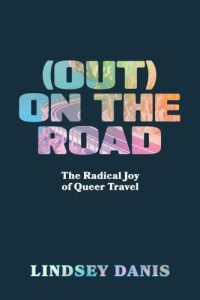
(Out) On the Road: The Radical Joy of Queer Travel by Lindsey Danis Ig Publishing, May 2026
Queer people hold passports at twice the rate of the general population and collectively spend around $100 billion a year on travel—yet remain one of the most underserved groups in the travel industry. A new book aims to change that.
(Out) On the Road by LGBTQ+ travel writer Lindsey Danis is the comprehensive, by-us-for-us guide that queer travelers have been waiting for.
“LGBTQ+ travelers are a growing demographic. They are passionate about travel and willing to spend money on it. Yet time and again, they are ignored or told to stick to a handful of ‘safe’ destinations. This advice fails to build their confidence, validate their identities, or teach them how to advocate for themselves,” says Danis.
(Out) On the Road challenges that conventional wisdom head-on. Drawing on decades of personal travel and eight years as an LGBTQ+ travel writer for publications including AFAR and GayCities, Danis covers everything from navigating safety to funding travel to finding support and connection on the road. Readers will discover how to face their fears, expand their comfort zones, plan affirming adventures — both in the US and internationally — and return home transformed.
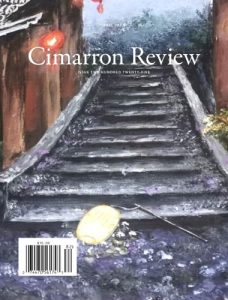
Since 1967, Cimarron Review has published imaginative, truth-driven poetry, fiction, and nonfiction by emerging writers alongside celebrated, award-winning literary voices. The newest issue (225) continues the tradition with poetry by Diana K. Malek, Jenn Blair, Lisa Titus, Sharon Lin, Dorsia Smith Silva, A.E. Stallings, Marisa Lin, Barbara Duffey, Jessica E. Pierce, SM Stubbs, Judith Skillman, Alec Hershman, Ori Fienberg, Danielle Hanson, Luke Hankins, Athena Kildegaard, nonfiction by Andrew Bertaina, Allison Field Bell, and fiction by Nona Caspers, Rebecca Orchard, JP Gritton, and Andrew Malan Milward.
Cimarron Review is a national journal of arts, letters, and opinions, published in the Winter, Spring, Summer, and Fall at Oklahoma State University, Stillwater.
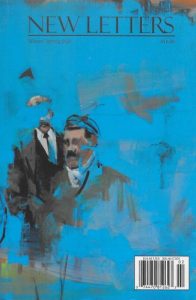
Published by The University of Missouri-Kansas City since 1934, New Letters Winter/Spring 2026 celebrates the New Letters Literary Award winners and Editor’s Choice Award recipients as well as incredible fiction from Andrew Bertaina, Billy O’Callaghan, and Dimitra Rizou — including her graphic story “Let’s Finish Early and Give Everyone 7 Minutes Back” (“Trust us,” the editors say, “you’ll want to spend more than 7 minutes with this one”). This issue also features poetry from David Thoreen, Kelly Gray, and Doug Ramspeck, plus thoughtful essays by Courtney Santo and Elissa E. Minor. A full-color portfolio of artwork by Dean Kube is included inside in addition to the cover image.
With Issue 50, Bellevue Literary Review celebrates its 25th Anniversary of publication! As Editor-in-Chief Danielle Ofri writes in her foreword, “We certainly weren’t thinking in terms of a silver jubilee back when this all started with a wisp of an idea about creative writing on health, illness, and healing. But these themes are universal, and using the arts to grapple with our shared vulnerabilities turned out to be a prescription that resonates with an ever-growing community.”
Issue 50 includes the winners of the annual BLR Literary Prizes: Shannon Perri for the Goldenberg Prize for Fiction; Won Lee for the Felice Buckvar Prize for Nonfiction; and Dara Laine for the John and Eileen Allman Prize for Poetry. Readers will find a wealth of new fiction, nonfiction, and poetry filling out the issue, with Ofri commenting, “We recognize that BLR writings engage directly with experiences of illness, loss, suicide, and the realities of the body in ways that may be intense or affecting for some readers. We hope you will find meaning and resonance in the stories, essays, and poems contained herein.”
Happy Friday! We hope you found some time to rest and recharge over the long weekend, and that you were able to pause and honor the memories of those who gave their lives in service.
This marks our final submission roundup for May—and you know what that means… deadlines are stacking up fast. There are plenty of opportunities still within reach, but the window is closing, so don’t wait to get your work out into the world.
Submission Opportunities: 134 Ways to Share Your Work
Looking for places to submit your writing, artwork, or hybrid work? You’re in the right place.
Each week, NewPages curates and updates a comprehensive list of open submission opportunities, including literary magazines, journals, presses, contests, and calls for themed issues. Opportunities span poetry, fiction, nonfiction, cross-genre, visual art, and more, with options for both emerging and established writers.
Paid newsletter subscribers receive early access to many of these calls before they’re posted publicly, along with our monthly eLitPak Newsletter, featuring additional opportunities, events, and industry news.
✏️ Have young writers at home? Don’t miss our Young Writers Guide, which highlights contests and publications open to grades K–12.
🏆 Interested in writing contests, book awards, and literary prizes? Explore our curated list of current contests from literary magazines, independent and university presses, writing organizations, and events.
🔔 What’s new this week? Items marked with a bell icon are newly added to this roundup.
“And still, you chose to sleep beside the ghost of me.”
— Ashes of Eden, “Sanctuary of Silence” (2026)
This week’s writing spark explores the architecture of a love that was never spoken aloud.
There are songs that find you in a particular kind of ache, the kind you didn’t know had a name until the music gave it one. Ashes of Eden’s “Sanctuary of Silence” is one of those songs for me. It explores something most love stories skip past entirely: not the dramatic ending, not the confrontation, but the quiet architecture of a love that was never spoken aloud. A devotion that built its own temple in the dark and kept the lights on even after the person it was built for walked away.
The line that won’t let me go: “And still, you chose to sleep beside the ghost of me.”
A note before we begin: I came to this song one way and found it held something else entirely. If you’ve lost someone—recently, or not so recently—this prompt has a room for that too. The sanctuary doesn’t care how the person left. Only that they’re gone, and that something of them still echoes, just like I cannot escape from the echo of my grandfather who would have turned ninety today.
Weekly Creative Prompt
Sanctuary of Silence
“And still, you chose to sleep beside the ghost of me.”
— Ashes of Eden, “Sanctuary of Silence” (2026)
This week’s writing spark explores the architecture of a love that was never spoken aloud.
There are songs that find you in a particular kind of ache, the kind you didn’t know had a name until the music gave it one. Ashes of Eden’s “Sanctuary of Silence” is one of those songs for me. It explores something most love stories skip past entirely: not the dramatic ending, not the confrontation, but the quiet architecture of a love that was never spoken aloud. A devotion that built its own temple in the dark and kept the lights on even after the person it was built for walked away.
The line that won’t let me go: “And still, you chose to sleep beside the ghost of me.”
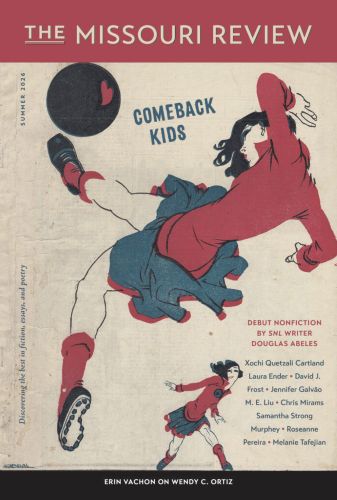
The Missouri Review Issue 49.1 (Spring 2026) is themed “The Cost of Living” and opens with a foreword by Speer Morgan who traces inflation from America’s founding to our contemporary anxieties, reflecting on the roles of scarcity, ambition, literature, and the emotional costs of survival. The issue goes on to highlight The Missouri Reviews 2025 Editors’ Prize winners: Peter Kessler (fiction), Eden Mecham (nonfiction), and Seth Simons (poetry). Readers will also enjoy discovering debut fiction from Emrys Penrose, new fiction from Yi Jiang and Geneviève Mathis, new poetry from Alissa M. Barr and Martin Rock, new nonfiction from Denise Galica and Marina Hatsopoulos, features on Modigliani and Mae West, and a review of three recent poetry collection considered in the context of the legacy of Confessionalism.
About Place Journal‘s May 2026 issue, The Ground Beneath Us: Place, Power, and Resistance, is a bold and unflinching issue that centers place as a living force shaped by history, marked by power, and sustained through resistance. In a political moment defined by state violence, environmental crisis, and struggles over bodily autonomy, this collection refuses neutrality. Instead, it asks what it means to belong, to remember, and to fight for the ground beneath us.
Bringing together poetry, essays, fiction, hybrid work, and visual art, the issue moves across landscapes both physical and imagined. Here, land is not backdrop but witness: to displacement and diaspora, to gentrification and ecological grief, to sacred memory and communal care. Each piece contributes to a larger tapestry that maps not only geography, but survival, resilience, and transformation.
Art takes over in the newest issue of AGNI(103). Paintings by Danielle Mckinney put the thinking self among canvases and books, prefiguring essays by Christie Hodgen, John Cotter, and Mairead Small Staid. In poetry, Victoria Chang and Phillip B. Williams, and in fiction, Jan Carson and Andrew Zornoza speak a self’s truth through art, while poems by Hilda Hilst, (translated by Justin Greene), D. Nurkse, and Hayan Charara counter boggling visitations with the bulwark of language. In this issue’s introductory essay, Senior Editor Shuchi Saraswat resists numbness above all her Editor’s Note, “To Be in a Time Of War.” In nonfiction, May Teng and Ashaki M. Jackson, and in fiction, and Jane Morton and Charu Sinha find an answer in the telling, and the listening.
A full table of contents and several sample works from this print issue are available to read online alongside AGNI‘s unique online-only content, including poetry by Campbell McGrath and Jeff Whitney, “Rewriting the Script of Matrescence Memoir: A Conversation with Erica Stern” by Elizabeth Brogden, “’The Border Moves Through Us’: From Minneapolis, 2026′ blog post by agnimag, and “To Never Have Risked Our Lives: A Portfolio of Central American and Mexican Diaspora Writing” with poetry, fiction, essays, and conversations coedited by Esteban Rodríguez, Jennifer De Leon, and Ben Black.
The Common Issue 31 includes essays about a friendship in Senegal and an injury that won’t heal; stories set in Turkey and India, and in a laboratory, a racetrack, a gym, and a farm; and poems on family, race, faith, Ukraine, and more by Fatimah Asghar, Olena Jennings, Ezza Ahemed, Lauren Delapenha, Aleksandar Hemon, Aimee Nezhukumatathil, and more. Visit The Common website for unique online content in addition to the print issue, such as “Conjuring Home: Talia Lakshmi Kolluri interviews Samina Najmi,” the podcast: A. J. Bermudez on “The Sixteenth Brother,” and the mesmerizing photo essay “On the Farm” by Nina Fuller.
TEACHERS! The Common website offers the section, “Teach The Common” with information about how to obtain classroom copies – with staff available to help select the best issues for the curriculum – and schedule a class visit with Editor-in-Chief Jennifer Acker.
Happy Friday! Our balmy stretch here in Michigan—punctuated by a few thunderstorms—has given way to cooler weather just in time for the long weekend. We’re wishing you a safe and restful Memorial Day.
And when you’re ready to write, revise, or submit, we’re here with this week’s roundup of opportunities—plus a small spark to get your ideas moving and your pen across the page (or fingers on the keys).
Submission Opportunities: 124 Ways to Share Your Work
Looking for places to submit your writing, artwork, or hybrid work? You’re in the right place.
Each week, NewPages curates and updates a comprehensive list of open submission opportunities, including literary magazines, journals, presses, contests, and calls for themed issues. Opportunities span poetry, fiction, nonfiction, cross-genre, visual art, and more, with options for both emerging and established writers.
Paid newsletter subscribers receive early access to many of these calls before they’re posted publicly, along with our monthly eLitPak Newsletter, featuring additional opportunities, events, and industry news.
✏️ Have young writers at home? Don’t miss our Young Writers Guide, which highlights contests and publications open to grades K–12.
🏆 Interested in writing contests, book awards, and literary prizes? Explore our curated list of current contests from literary magazines, independent and university presses, writing organizations, and events.
🔔 What’s new this week? Items marked with a bell icon are newly added to this roundup.
“I like the stars. It’s the illusion of permanence, I think… I can pretend that things last. I can pretend that lives last longer than moments.”
Neil Gaiman, The Sandman, Vol. 7: Brief Lives
This week, we’re drawing inspiration from Miia’s Dynasty to explore the things we built, believed in, and lost—and what, if anything, remains.
For a long time, Miia’s Dynasty was everywhere—YouTube Shorts, fan-made MVs for the dramas I was watching, layered under scenes of characters loving each other badly or beautifully or both at once. When you hear it in that context enough times, it gets under your skin. It adds a bittersweet poignancy to everything it touches.
Then the other day, just streaming music, Miia’s own video came on—and I was transported. Back through all those clips, all those stories, and then further, into thinking about the different kinds of dynasties we build in our own lives. The ones we were born into. The ones we chose. The ones we were so sure would last.
It’s a little like what Adele did with Rolling in the Deep—that gut-punch of we could have had it all. The belief was real. The loss was real. And somewhere in the space between those two truths is where the song lives.
This time of year, when we’re thinking about what endures and what doesn’t—the things handed down, the things lost, the names we still speak and the ones that quietly faded—Dynasty feels like exactly the right spark.
What we build. What we believed about it. What falls. What remains.
This Week’s Challenge
Choose the moment that pulls you in and create from there.
The Belief Write or create from inside the certainty. Before the cracks, before the signs. What does it feel like to be sure something will last? A relationship, a family, a way of life, a legacy built across generations. Let your work hold that conviction without irony, the reader should feel how real it was.
The Fall Collapse isn’t always loud. Sometimes a dynasty ends in a single quiet decision, a silence where there should have been a word, a door closing softly on something enormous. Write or create from inside the unraveling. What does it look like, feel like, sound like from where your character is standing?
The Gap That specific, suspended moment of realizing it’s over. Not the aftermath, the instant. The breath between what you thought you had and the truth of what remains. This is the hardest territory to write and the most resonant when you get it right.
The Aftermath What survives a dynasty’s end? A photograph. A last name. A habit. A scar. A song someone still hums without remembering where they learned it. Write or create from what’s left behind—what gets carried forward and what gets buried.
Three Craft Notes
Let scale be flexible.
A dynasty doesn’t have to be a kingdom. The most powerful versions of this prompt will probably be intimate—a family, a relationship, a self-concept that once felt unshakeable. Don’t reach for the grand when the small is closer to the truth.
Resist explaining the loss.
The temptation in collapse narratives is to account for everything—to make the fall make sense. But the most haunting work leaves something unnamed. Trust the gap. One unexplained detail held with confidence will do more than a paragraph of analysis.
For visual artists and collage makers:
Think about what a dynasty looks like at each stage—the gold of the belief, the fracture lines, the ruins, the single artifact that outlasts everything else. Juxtaposition between grandeur and intimacy can carry the whole emotional arc without a single word.
Enjoy prompts like this?
Get fresh inspiration delivered to your inbox every Monday by subscribing to our weekly newsletter. You’ll also find new issues of great lit mags, new and forthcoming titles, recommended readings, bookstore updates, and submission opportunities.
The Malahat Review 234 opens with the 2026 Constance Rooke Creative Nonfiction Prize Winner, “The First Law of Adoptee Physics” by Hayden Park and the 2026 Open Season Awards: Andrea Bishop (fiction), “Show and Tell”; Stephanie Harrington (cnf), “Chimera”; and Cassandra Myers (poetry), “Quantum Entanglement for Honeybees and Other Yellow Collisions.”
The issue is also filled with great poetry by Lorna Crozier, Joe Gorman, Kath Healing, Leigh Kotsilidis, Steve Noyes, José Emilio Pacheco, (translated from the Mexican Spanish by George McWhirter), Ayaz Pirani, Jessica Popeski, Xitlalitl Rodríguez Mendoza (translated from the Mexican Spanish by Daniela Rodríguez Chevalier and Dora Prieto), John Steffler, Christine Walde, and Jordan Williamson; fiction by Diana Dima, Sophie Jai, and Claire Wilmot; and creative nonfiction by Carmen G. Farrell and Russell Thornton, as well as six reviews of new works of poetry, fiction, and nonfiction.
Published out of Mississippi Valley State University, Valley Voices Spring 2026 opens with “A Poetic Duet: An Interview with Tobi Alfier and Jeffrey Alfier” and continues with “Transience” a photo essay by Claudia Brefeld, spotlighting photos on “passing away” and “traces of time that become visible and highlight transience. This transience has a special beauty and melancholy inherent in it. And so, each photo tells its own story.”
Readers will also enjoy fiction and nonfiction by Jacqueline St. Joan, Charlie R. Braxton, Daniel Webre, and Susan Duke, and poetry from Michael Catherwood, V. P. Loggins, Charles Rammelkamp, Philip C. Kolin, Kerri L. Bennett, Caitlyn Burns, Patricia L. Hamilton, Susana H. Case, Susan Weaver, Bradley R. Strahan, Will Limehouse, Kelly Talbot, Bert Molsom and many more.
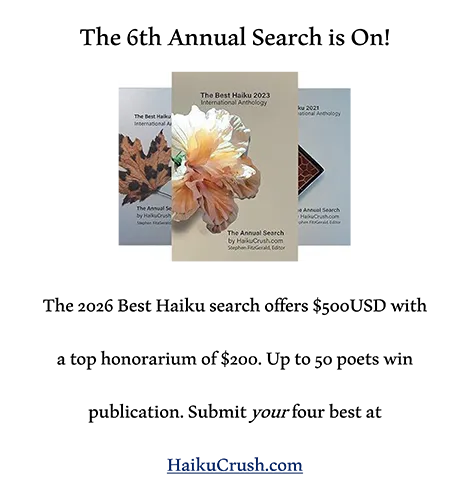
Do you write historical fiction? Submit your unpublished short story (up to 5,000 words) set in any historical setting, any subgenre, any time period before 2000 to the 4th Annual History Through Fiction Short Story Contest, open June 15 — August 15, 2026.
Writers compete for cash prizes, including a $250 grand prize, and publication in the History Through Fiction’s next paperback anthology (March 2, 2027). Writers will also receive editorial feedback on every submission. Multiple submissions accepted.
Early bird fee: $20 through July 14; regular fee: $30 beginning July 15.
Let your story recover the past and reach new readers!
Founded in 2019 by Minnesota author and historian Colin Mustful, History Through Fiction is an independent press dedicated to publishing high-quality historical fiction.
The Greensboro Review has been publishing the best poetry and fiction from emerging and established voices since 1966, and their Spring 2026 issue (Number 119) continues this tradition, featuring the Robert Watson Literary Prize winners, Mai Mageed’s “Signs of Intelligent Life” for fiction and Anne Shafmaster’s “Love and Beauty” for poetry, as well as new work by Marcie Alexander, Taylor Byas, Michael Chang, Alex Chertok, Kennedy Coyne, Anna Egeland, Desmond Everest Fuller, Lyn Butler Gray, Tammy C. Greenwood, Julia Kolchinsky, Suphil Lee Park, K. A. Polzin, Alison Powell, Rick Rohdenburg, Jordan Roubion, Rob Magnuson Smith, Kate Welsh, Caroline White, Avra Wing, and Corey Zeller.
Deadline: June 15, 2026 A prize of $1,500, publication of the chapbook in the Tusculum Review’s 22nd volume (2026), and creation of a limited-edition stand-alone chapbook with original art is awarded for the winning chain of poems.
Contest judge: Nate Marshall. Deadline: June 15 on Submittable.
Finalists announced in July, the winner in August. Publication and live launch in November. View flyer for more details.
Want early access to our eLitPak flyers? Subscribe to our weekly newsletter! You can also support NewPages with a paid subscription and get early access to the majority submission opportunities, upcoming events, and more before they are posted to our site.
Catamaran seeks unpublished, book-length poetry manuscripts (60–100 pages) in English from poets living in California, Washington, Oregon, Alaska, or Hawaii.
Prize: $1,000 and book publication. Entrants receive a complimentary one year subscription to Catamaran. Judge: Joseph Millar. Deadline: July 1, 2026.
Individual poems may have prior journal publication (with acknowledgments). Simultaneous and multiple submissions allowed; notify if accepted elsewhere. Submit blind (no identifying information). Winner, finalists, and semifinalists announced September 2026; publication expected April 2027.
Want early access to our eLitPak flyers? Subscribe to our weekly newsletter! You can also support NewPages with a paid subscription and get early access to the majority submission opportunities, upcoming events, and more before they are posted to our site.
Acclaimed novelist, editor, teacher and “literary godmother” Kate Moses has been taking writers under her wing for over 3 decades – you too can realize your vision for your work with a mentor as invested in your story & your growth as you are. Recent mentees have been published by Flatiron,Northwestern U Press, SheWrites, and Sybilline; won the Pushcart Prize, Narrative Prize, and Independent Book Publishers Association Medal; finalists for Greywolf Nonfiction Prize and Next Generation Indie Book Award; in residence at Breadloaf, Craigardan, Hedgebrook, and Hewnoaks.
Want early access to our eLitPak flyers? Subscribe to our weekly newsletter! You can also support NewPages with a paid subscription and get early access to the majority submission opportunities, upcoming events, and more before they are posted to our site.
Deadline: August 31, 2026 Nine Mile Magazine publishes online twice yearly, showcasing works deeply imbued with life. We seek to bring great writing to our readers, without consideration of school, style, or form, with a special focus on CNY and featuring writers within and outside the mainstream. Our Propel Poetry initiative publishes books by first rate poets with disabilities.
Want early access to our eLitPak flyers? Subscribe to our weekly newsletter! You can also support NewPages with a paid subscription and get early access to the majority submission opportunities, upcoming events, and more before they are posted to our site.
Join us at the 10th Annual Taos Writers Conference in beautiful Taos, New Mexico, July 24-26, 2026, with keynote speaker and featured faculty member, Alexandra Fuller (Let’s Not Go to the Dogs Tonight, Fi, and many others). Other instructors include Connie Josefs, Valerie Martinez, Juan Morales, Allegra Huston, Sean Murphy, & Kristina Marie Darling. Offering over twenty workshops in poetry, fiction, memoir, playwriting, screenwriting, and more. FMI: view flyer, [email protected], www.somostaos.org, or 575-758-0081.
Want early access to our eLitPak flyers? Subscribe to our weekly newsletter! You can also support NewPages with a paid subscription and get early access to the majority submission opportunities, upcoming events, and more before they are posted to our site.
The Word Works is currently open for two opportunities. The May/June Open Reading Period accepts full-length poetry manuscripts (typically 48–80 pages) from May 1 through June 30; up to five books are selected for publication; entry fee: $20.
The Tenth Gate Prize (June 1–July 15) awards $1,000 and publication for a full-length collection by a mid-career poet with at least two previously published books (chapbooks and self-published titles do not count). Submissions are read anonymously; follow general guidelines.
Want early access to our eLitPak flyers? Subscribe to our weekly newsletter! You can also support NewPages with a paid subscription and get early access to the majority submission opportunities, upcoming events, and more before they are posted to our site.
The Colorado Authors League (CAL) supports and promotes its community of published writers while connecting with and adding value to the reading world. Formed in 1931, authors become members to: keep up with changes in the craft of writing, publishing, and marketing, gain greater visibility for their writing, join a group of like-minded people who love writing.
Want early access to our eLitPak flyers? Subscribe to our weekly newsletter! You can also support NewPages with a paid subscription and get early access to the majority submission opportunities, upcoming events, and more before they are posted to our site.
The Midwest Quarterly Spring 2026 is a special issue on “Dyslexia and Reading Failure” with Guest Editor David P. Hurford. Articles in this issue include “Writing Systems, Reading, Reading Failure, and Structured Literacy” by David P. Hurford, “Red Ink” by Hailey Cavaglieri, “So Much More Than ‘Just A Mom’: The Struggle of a Teacher to Find Support for Her Son, A Struggling Reader with Dyslexia” by Michelle M. Keiper, “Social-Emotional Experiences of Individuals with Reading Difficulties” by Alex C. Fender and Amy Marcoux, “My Story With Dyslexia” by Paisley Plank, “Lessons from a More Enlighted Writer and Teacher” by Casie Hermansson, “Attention-Deficit/Hyperactivity Disorder and Its Contribution to Reading Failure” by Thomas E. Hurford and Michaela R. Ozier, in addition to twelve other articles and several poetry contributions.
Happy Friday! It was a cold, gloomy week here in the mitten state, but brighter days are ahead—sunshine and warmer weather are finally settling back in. It’s the perfect excuse to grab a notebook and your favorite pen and head outside, letting a little fresh air shake loose the last of those unseasonal doldrums.
Whenever you’re ready to put words on the page, NewPages is here with a spark of inspiration and more than 100 submission opportunities to help you find the right home for your work. Don’t wait—mid-May brings a wave of deadlines, and many are coming up fast.
This week's writing spark asks you to examine what's become overgrown in your work or your life—and what it truly costs to cut it back so something healthier can take…
Submission Opportunities: 127 Ways to Share Your Work
Looking for places to submit your writing, artwork, or hybrid work? You’re in the right place.
Each week, NewPages curates and updates a comprehensive list of open submission opportunities, including literary magazines, journals, presses, contests, and calls for themed issues. Opportunities span poetry, fiction, nonfiction, cross-genre, visual art, and more, with options for both emerging and established writers.
Paid newsletter subscribers receive early access to many of these calls before they’re posted publicly, along with our monthly eLitPak Newsletter, featuring additional opportunities, events, and industry news.
✏️ Have young writers at home? Don’t miss our Young Writers Guide, which highlights contests and publications open to grades K–12.
🏆 Interested in writing contests, book awards, and literary prizes? Explore our curated list of current contests from literary magazines, independent and university presses, writing organizations, and events.
🔔 What’s new this week? Items marked with a bell icon are newly added to this roundup.
A line from a novel-in-progress inspired by gardening? Why not? Can you imagine what a simple phrase can morph into when you are writing? Shall we “cut the rot and keep the roots” together?
Weekly Creative Prompt
Cut the Rot, Keep the Roots
“The most important thing is to prune well. And to prune well, you must know why you are cutting.”
— Unknown
This week’s writing spark asks you to examine what’s become overgrown in your work or your life—and what it truly costs to cut it back so something healthier can take root.
There is a particular kind of grief that comes from watching something you tended carefully go wrong anyway.
My chives used to be a dense, thriving cluster — the kind of herb patch that made you feel like you knew what you were doing. Then, gradually, they didn’t. Early blooming, sparse growth, a tangle so enmeshed the whole clump had forgotten how to be healthy. Meanwhile, the garlic chives spread with complete indifference to anything resembling restraint, colonizing every nearby inch of soil.
The solution, it turns out, is almost brutal in its simplicity. Cut the flowers before they seed. Divide the clumps. Pull the whole thing apart and give each smaller section room to breathe again. The plant doesn’t die from this — it comes back stronger. But you have to be willing to do something that looks, from the outside, a lot like destruction.
Gardeners know this. Writers and artists often need to be reminded of it.
This Week’s Challenge
Think about something in your creative life—or your interior life—that has become overgrown, entangled, or choked by its own abundance. A project that kept accumulating until the original idea disappeared somewhere in the middle. A habit, a relationship, a way of working, a belief you’ve held so long it’s started to crowd everything else out. A voice in your writing that used to serve you and now just fills space.
What would it mean to cut the flowers—to remove what’s seeding more chaos—and separate what remains back into something smaller, cleaner, and capable of growing again?
Create from that threshold. The moment of decision. The act itself. Or the quiet afterward, when the bed looks almost bare and you have to trust that what you kept is enough.
Write, draw, photograph, collage, or compose something that lives in the tension between loss and renewal—where pruning is not abandonment, and division is not the same thing as destruction.
A Way In
If you’re not sure where to begin, start with a specific thing rather than a concept. A paragraph you’ve been carrying in a draft for two years that no longer belongs. A friendship that once felt essential and now feels like obligation. A creative practice you’ve outgrown but haven’t yet let go of. The more concrete and particular your entry point, the more the larger emotional truth will take care of itself.
Three Craft Tips
Not sure where to begin or how to go deeper once you’ve started? These three practices work especially well when the subject matter is loss, necessity, and the things we can’t fully explain.
Let the act speak—resist the explanation
The temptation with a prompt this close to the bone is to explain what it means while you’re writing it. But the most resonant work about necessary loss doesn’t announce itself. It shows hands in dirt. It shows the pause before the cut. It trusts the reader to feel the weight of what’s being separated without being told what to feel.
Write the physical reality of the thing—the tangled roots, the overgrown manuscript, the drawer you finally cleared out—and let the emotional meaning arrive on its own.
Honor what was healthy before it wasn’t
The pitfall of any “letting go” piece is that it can flatten what came before into a problem to be solved. But chives don’t go wrong out of failure—they go wrong out of abundance, out of too much of a good thing left unattended. The more honest and specific you are about what the thing was at its best, the more your piece will carry genuine grief rather than tidy resolution.
Don’t skip the eulogy for what worked. That’s where the real texture lives.
Resist the clean ending
Pruning in a garden looks decisive. On the page, the aftermath is messier and more truthful—what you kept isn’t guaranteed to thrive, and you won’t know for a while. If your piece arrives too neatly at peace with what was cut, push back on that draft.
The most honest version probably ends in uncertainty: the bed looks bare, and you’re not sure yet if you did the right thing, and you water it anyway.
Enjoy prompts like this?
Get fresh inspiration delivered to your inbox every Monday by subscribing to our weekly newsletter. You’ll also find new issues of great lit mags, new and forthcoming titles, recommended readings, bookstore updates, and submission opportunities.
The Spring 2026 print issue of Boulevard includes 2024 Nonfiction Contest winner Mohammad Hakima, and 2024 Poetry Contest winner Rachel Stempel. It also features a Boulevard Craft Interview with Aria Aber and a symposium on the question of silence in art.
Readers will also enjoy fiction from David Nikki Crouse, Connor Greer, Amanda DeMatto, Cormac Badger, and Cathy Kisakye; nonfiction from Patrick Blaney, Finn Deerhart, G.H. Plaag, Alison Powell, Molly Rideout, and Emily Weitzman; and poetry from Ayesha Asad, Angela Ball, Bruce Bond, Andy Chen, Ava C. Cipri, Patrick Donnelly, Nathan Erwin, Siobhán Gordon, AT Hincapie, Olga Mexina, Weston Morrow, and Brianna Steidle.
If you are looking for good literary media content, check out Alaska Quarterly Review on YouTube, “Diverse. New, emerging, and established voices. Readings and literary conversations with depth, complexity, and humanity.”
Unplug to enjoy the newest issue of Alaska Quarterly Review, Spring 2026, which opens with new stories by Amy Benson , Catherine Kim, Katherine D. Stutzman, Eion Connolly, Maria Kuznetsova, Courtney Angela Brkic, Wendy BooydeGraaff, Beth Staples, Michael Czyzniejewski, and Jeremy T. Wilson; essays by Joyce Dehli, Heather Sellers, Tom Kizzia, Debbie Urbanski; and poetry by Alison Jarvis , Margaret Mackinnon, Sara Eliza Johnson, John A. Nieves, Rebecca Macijeski, Brandel France de Bravo, Lauren Camp, Emily Skaja, Michael Montlack, Richard Spilman, Michael Waters, Brian Komei Dempster, Vandana Khanna, Lucas Jorgensen, Benjamin Grossberg, Rosebud Ben-Oni, Masin Persina, Jennifer Stewart Miller, Catherine Pierce, and Craig van Rooyen.
Baltimore Review Spring 2026 issue is now online to enjoy, with opening lines that will entice you to keep reading. In creative nonfiction: “All winter we cultivate our manias.” writes Amy Halloran in “Vegetable Kingdom”; Annie Marhefka opens “El Sendero” with “In his dating profile picture, Greg has sun on his face. . . “; “At Pickles Pub in Baltimore” by Caroline Bock starts, “Within the first fifteen minutes, I learn that you haven’t read a book in thirty years…”; and “Searching for the Fifth Sense” by Betty Ruddy – “I used to have a nose.”
In fiction, the titles are enough, with Yuan Jiang’s “PagerDuty Against the End of the World,” Julien Shen’s “Ducks,” and Gordon Brown’s “Death of a Hotel Manager.” Poets featured in this issue include Zach Eaton, Amie Whittemore, Patrick Whitfill, Dana Holley Maloney, Meg McManama, Jane Hilberry, and Emily Kingery.
The namesake for the online Mistake House Magazine is Principia’s Mistake House, a small structure on the Principia College campus that showcases the creative process of architect Bernard Maybeck. Built in 1931, this cottage allowed Maybeck to test the materials and methods he would later use throughout campus. Mistake House continues to inspire Mistake House Magazine, whose vision is to create a home for literature and art that values both the creative process and final design.
The new May 2026 issue opens with Soap Bubble Set, showcasing one visual artist and one writer, this month spotlighting writer Saúl Hernández and artist Ron Young. The issue continues with fiction by Nic Hinson, Javier Perez Rizo, Leah Johnson, Genevieve Owens, and Sage Kirkbride; poetry by Sophie Cornwell, Brianna King, Zack Carson, Zack Carson, Wyatt Vaughn, Erica Moore, Milagros Muschella, Madi Raleigh, Gracie Jones, Kate Shipp, and Phoebe Robbins. This issue includes Mistake House‘s sixth annual photography section, featuring five student photographers: Ena Castillo, Maryam Ghasempour siahgaldeh, Fatemeh Fani, Lamiya Terrell (Editor’s Prize for Photography), and Graham Littell.
Waxing & Waning Issue 16 is a print issue themed “Free as Animal” and features poetry by M Anne Avera, Kathleen Fields, Kimberly Hall, Pramod Lad, C. Larkin, Bleah Patterson, Danielle Ryle, and John Wojtowicz; fiction by Ian Boisvert, Stacey Gordon, Derek Krause, Adam McOmber, Dalton Miller, and Mark Wolters; creative nonfiction by Annalise C Biesterfeld; drama by Samantha Dols; artwork by K Garcia, Adeline Jackson, Donald Patten, and Zahra Zoghi; and a comic by Cannon Hawley. Readers can order single copies of Waxing & Waning from the publisher’s website.
Happy Friday! Monday gave us sunshine and warmth—just enough to make us believe we’d finally turned a corner. But the week has since folded in on itself, bringing cloudy skies and a twenty- to thirty-degree drop that has us back in sweaters, wondering if spring—or even summer—is truly on its way.
In the gray and chill, I’ve been doing what so many of us do: turning inward. This week has been filled with brainstorming, drafting, and trying to wrangle a serialized fiction project that seems to have taken on a life of its own—shifting, resisting, refusing to be neatly contained. If you’ve ever chased a story that insists on becoming something else entirely, you know the feeling.
Whether you’re navigating that same creative restlessness, ready to send your work back out into the world, or simply looking for a spark to get started, NewPages is here to help. Our weekly roundup of submission opportunities is ready when you are.
A craft prompt exploring how mirrored scenes, parallel structures, and diptych forms can emerge naturally in writing and art—and how to work with that instinct without forcing it into symmetry.
Submission Opportunities: 114 Ways to Share Your Work
Looking for places to submit your writing, artwork, or hybrid work? You’re in the right place.
Each week, NewPages curates and updates a comprehensive list of open submission opportunities, including literary magazines, journals, presses, contests, and calls for themed issues. Opportunities span poetry, fiction, nonfiction, cross-genre, visual art, and more, with options for both emerging and established writers.
Paid newsletter subscribers receive early access to many of these calls before they’re posted publicly, along with our monthly eLitPak Newsletter, featuring additional opportunities, events, and industry news.
✏️ Have young writers at home? Don’t miss our Young Writers Guide, which highlights contests and publications open to grades K–12.
🏆 Interested in writing contests, book awards, and literary prizes? Explore our curated list of current contests from literary magazines, independent and university presses, writing organizations, and events.
🔔 What’s new this week? Items marked with a bell icon are newly added to this roundup.
“Perhaps all the dragons in our lives are princesses who are only waiting to see us act, just once, with beauty and courage.”
— Rainer Maria Rilke
A craft prompt exploring how mirrored scenes, parallel structures, and diptych forms can emerge naturally in writing and art—and how to work with that instinct without forcing it into symmetry.
I have a confession to make. Working through a draft recently, I noticed something I hadn’t engineered. Two scenes—separated by chapters, featuring different characters—were quietly answering each other. Same emotional stakes, different outcomes. Same unspoken question, different silences. I hadn’t planned it. The mirror was already there.
That’s the thing about mirroring in creative work. We often reach for it instinctively before we understand why.
A mirror in writing or art isn’t just visual symmetry. It’s a structural echo—a repeated event, a parallel relationship, a second image that reframes the first simply by existing. A poem where the closing lines reverse the opening. A story where two characters make the same choice under different circumstances and one of them breaks. A diptych—and yes, the diptych isn’t only for visual artists; two poems placed side by side, two flash essays in conversation, two panels of a comic—where the meaning lives in the gap between the halves, not in either half alone.
The instinct toward mirroring is natural. The challenge is learning when to trust it and when to get out of its way.
This Week’s Challenge
Create something that uses mirroring as a structural device—but don’t force it. Start with one image, one scene, one voice. Then let the second half arrive on its own terms. What answers it? What reverses it? What stands across the glass and means something different depending on which side you’re reading from?
Craft Lesson
The most common pitfall with mirrored structures is engineering the symmetry too early. When a mirror is built before the material has found its own shape, it tends to flatten both halves — each one bending toward the other instead of standing on its own. Write the first half as if there is no second. Let it be complete. The mirror, if it belongs, will reveal itself in revision.
A mirror doesn’t have to be exact to work. The most resonant parallels are the ones that are almost symmetrical but not quite — two scenes that rhyme without matching, a repeated phrase that shifts meaning because the speaker has changed. Imperfect mirrors carry more emotional weight than perfect ones. They create the sensation of recognition without the neatness of resolution.
Enjoy prompts like this?
Get fresh inspiration delivered to your inbox every Monday by subscribing to our weekly newsletter. You’ll also find new issues of great lit mags, new and forthcoming titles, recommended readings, bookstore updates, and submission opportunities.
The newest issue of The Blue Mountain Review, an online journal of culture, opens with an introduction by Major Jackson. He shares the kind of chaos and pain that drove him toward poetry, emphasizing how reverence for language and community among writers shaped his growth. Jackson argues seeing poetry not as ego or ambition, but as a lifelong, rigorous, communal practice contributing to a larger human conversation. Prince Stash is the focus of the new European issue of The Blue Mountain Review (April 2026), which can be read online via issuu, and also includes interview, music interviews, artwork, travel and fashion features, as well as fiction, essays, and poetry.
The May 2026 issue of The Lake, an open-access journal of poetry and poetics, is now online featuring new poetry by Mallika Bhaumik, Barbara Daniels, Paul Dickey, Glenn Hubbard, Hana Kelly, MK Kuol, Rebecca O’Hagan, Kristen Park, J. R. Solonche, and Matt Zambito. This issue also includes reviews of contemporary poetry collections, this month spotlighting Laura Kasischke’s I Was Bonnie & Clyde, Tom Kelly’s These Are My Bounds, and Polly Clark’s Afterlife. The Lake also invites poets to send a poem from a recently published book for its unique column “One Poem Review.” The May 2026 issue shares works from M.L. Lyons, Judith Priestman, and Jeannie Mackenzie. Contact The Lake if you’re a poet who would like to share a selection from your own book!
No Packing Necessary: Poems for the Solo Journey by Patricia Ann Joslin Main Street Rag, March 2026
No Packing Necessary: Poems for the Solo Journey is a book of narrative poetry, easily accessible for those recovering from the loss of someone dear. It is a follow-up collection to I’ll Buy Flowers Again Tomorrow: Poems of Loss and Healing published by Charlotte Lit Press in 2023. The title of this second book comes from a line in one of the poems. It speaks to the timelessness of memory — the things we carry in our hearts. Poems reflect the shared experience of grief and the journey of moving forward as time passes. Themes include navigating loss, widowhood, aging and the magic of life in later years.
“’The divine exists even in the darkest places,’ writes Joslin, but these poems are fa from dark. Though many deal with aging, mortality, and grief, they exhibit grace, vulnerability, and empathy. She renders the world in vivid sensory detail — a flash of cardinal’s wing, rock wrens rising in song, the scent of her father’s pipe tobacco — and moves us to see the ‘bliss in the mystery of it.’” — David E. Poston, author of Letting Go.
Patricia Ann Joslin raised her family in Minnesota, and now lives in Charlotte, North Carolina.
Sky Island Journal Co-Founder and Co-Editor Jason Splichal opens Issue 35 with these chilling words, “You need to know that there are several writers in this issue who are risking their lives publishing with us. They’ve deemed that risk acceptable in order for them to express themselves and for you to have the opportunity to experience and share their art.” This is in keeping with the mission of Sky Island Journal, Splichal explains: writers are risking their lives to publish uncensored truth, and the journal is committed to protecting and amplifying those voices. Sky Island Journal posits itself as a champion of global freedom of expression and has done so while building an independent, supportive literary community connecting readers and writers worldwide.
In this newest issue, readers will find works by Alex Dawson, Alicia Potee, Andrew Fisher, Bella Melardi, Brandon McNeice, Dibyangana Maji, Elli Mari, Erika MacNeil, Grace Lynn, J. Alan Nelson, JH Tomen, Kristen Reece, Lorrie Ness, Madison McClintock, Mariam Anahita Amin, Melanie Maggard, Nabhan Khraishi, Paul Julian, Pratiksha Ahuja, Robert Nordstrom, Sarah Platenius, Sian Maciejowski, Sydney Lea, Zoleikha Baloch and many more.
Happy May! Another month is behind us in 2026 and the year is stretching closer to half over. How are your writing and submission goals coming along? Well, we hope. To help you stay committed and inspired, we are back with our fist roundup of submission opportunities for May along with a little creative spark to help you find your way.
Submission Opportunities: 120 Ways to Share Your Work
Looking for places to submit your writing, artwork, or hybrid work? You’re in the right place.
Each week, NewPages curates and updates a comprehensive list of open submission opportunities, including literary magazines, journals, presses, contests, and calls for themed issues. Opportunities span poetry, fiction, nonfiction, cross-genre, visual art, and more, with options for both emerging and established writers.
Paid newsletter subscribers receive early access to many of these calls before they’re posted publicly, along with our monthly eLitPak Newsletter, featuring additional opportunities, events, and industry news.
✏️ Have young writers at home? Don’t miss our Young Writers Guide, which highlights contests and publications open to grades K–12.
🏆 Interested in writing contests, book awards, and literary prizes? Explore our curated list of current contests from literary magazines, independent and university presses, writing organizations, and events.
🔔 What’s new this week? Items marked with a bell icon are newly added to this roundup.
“The mind is not a vessel to be filled, but a fire to be kindled.”
— Plutarch
This week’s prompt asks you to excavate the oddly specific, inexplicably sticky piece of trivia your brain chose to keep—and turn it into art.
I studied semantics and grammar in high school. I took German. And somehow, of all the vocabulary, root words, and linguistic rules I was supposed to carry forward, what lodged itself most firmly in my brain was this: das Fenster—the window. And therefore, defenestration: to throw out the window.
That’s it. That’s the piece of trivia my brain decided was worth keeping.
Which got me thinking: why that one? And what does it mean that our minds file away these oddly specific scraps—a word, a formula, a fact about a plant or a battle or a geometric shape—often at the expense of things we were actually trying to remember?
This Week’s Challenge
What seemingly trivial piece of data has taken up permanent residence in your brain? The kind of thing that surfaces unbidden, that you could recite at 3 a.m. without trying, that you have no practical use for and yet cannot seem to lose?
Got it? Now turn it into something.
Maybe the fact itself is the spark—what kind of story lives inside defenestration, or inside whatever your brain’s inexplicable tenant happens to be? Maybe the more interesting territory is the why: what does it mean that this particular thing stayed? What was happening in your life when it arrived? What did it quietly replace?
A Few Directions to Consider
For writers, you might write a piece in which a character is defined by the one useless thing they know—and what that reveals about who they actually are. Or write the memory itself: the classroom, the book, the moment the fact arrived and refused to leave.
For visual artists, consider what it looks like to map a brain’s arbitrary filing system—the grand and the absurd shelved side by side, the important and the trivial given equal real estate. What does that look like as a collage, an illustration, a diagram?
For anyone: the stuck fact doesn’t have to be the subject. Let it be the door.
Craft Tip: Don’t Get Hung Up on Explaining
Resist the urge to explain why the detail matters. The most interesting version of this prompt is the one where the writer trusts the strangeness without justifying it—where the odd little fact simply arrives in the piece and does its work quietly. The reader will feel the significance. You don’t have to name it.
Enjoy prompts like this?
Get fresh inspiration delivered to your inbox every Monday by subscribing to our weekly newsletter. You’ll also find new issues of great lit mags, new and forthcoming titles, recommended readings, bookstore updates, and submission opportunities.
Publishing quarterly, three online issues and one print annual, West Trade Review Spring 2026 (Volume 17) is available to order in print with sample works open-access on their website. This issue includes a themed section “Borders & Border Crossings” as well as new poetry, creative nonfiction, and fiction by Justin Taroli, Rebecca Makkai, Vincent Perrone, Elliott Gish, Madison Ellingsworth, Ericka Russell, Jill Barrie, Paul Hostovsky, Brice Maiurro, Dylan Tran, Lucy Griffith, John Muellner, Alex Vigue, Sean Thomas Dougherty, Christian Paulisich, Sharon Du, J.L. Chen, D Anson Lee, Schyler Butler, John Carmen Harper, Natalia Martinez, Christien Gholson, Cam McGlynn, Eileen Pettycrew, Amanda Turner, and many more. Cover image: Weightless by Denis Sarazhin.
West Trade Review is looking for submissions for their weekly Substack feature Trill: Poems That Resonate — “poems that uniquely explore each month’s theme and perform Olympic feats with language that leave a reader in wonder while still referring back to the basic things that make us human.”
The newest annual issue of Revolute .007 is now available for readers to enjoy online, opening with cover art by Michiko Itatani and an interview with poet Ally Ang, who comments, “As poets, it’s our job to be that call — that continuous call to imagination.”
The issue also features poetry by Gray Davidson Carroll, MICHAEL CHANG, Abigail Cloud, Z.T. Corley, Jose Hernandez Diaz, Theodore Heil, Elane Kim, Hilary King, Anzhelina Polonskaya; fiction by Chris Clemens, Bri Dent, Alec Evan March; nonfiction by Taylor Olsen, E.P. Tuazon; and Microreviews of Oh Oblivion by Robert Krut; The Hollow Half: A Memoir of Bodies and Borders by Sarah Aziza; Velvet by William Fargason; Ekhō : A Poem in Three Parts by Roslyn Orlando: A Study in Repetition; An Image of My Name Enters America: Essays by Lucy Ives; Lesser Ruins by Mark Haber; Good Night, Sleep Tight by Brian Evenson; Something Small of How to See a River by Teresa Dzieglewicz; and The Life of Violet: Three Early Stories by Virginia Woolf, edited by Urmila Seshagiri.
Red Tree Review Issue 6 is available open-access online for readers to enjoy “incredible poems that surprise, harrow, and awe,” featuring new work from Andrew Robin, Anne Moore Odell, Michael Rerick, Kathleen Hellen, James Croal Jackson, Justin Hollis, Greg Field, Jessica Purdy, Phillip Sterling, Hilary Sideris, Andrew Vogel, Colleen Harris, Bart Edelman, and Martha Clarkson. These poems from both new and established writers move from the elegiac to the uneasy, observational and nostalgic to surreal and grief-stricken.
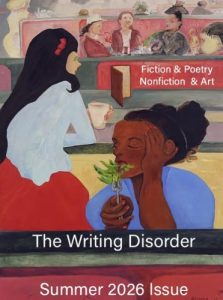
The newest issue of the open-access online journal The Writing Disorder opens with “The Art of Light,” a portfolio by experimental visual artist Jacqueline Hen, who creates innovative work in light and space. The issue is also filled with great works of fiction, nonfiction, and poetry by Sharon L. Dean, Kevin Daniel Scheepers, Ann Levin, Nicholas Godec, Ayoung Kim, Lynn McGee, Annie Powell Stone, Barbara Krasner, Roberto Ontiveros, David Sapp, Rongili Biswas, Kurt Schmidt, John Ronan, Jeanne-Marie Fleming, David Lightfoot, Bernard Martoia, Ken Wuetcher, as well as Danijela Trajković’s book review of On Rapture And Death by Stella Vinitchi Radulescu.
Not all wandering boys are lost. Some are simply alone.
This week’s inspiration spark explores the quiet ache of the lonely boy, the drifting of the lost boy, and the stories that unfold when we learn to tell them apart.
Something that’s been echoing in my mind while drafting my serialized novel is the idea of “lonely boys.” Boys who grow up isolated inside their own families. Boys who move through the world unseen. Boys who learn to carry silence like a second spine.
Loneliness shapes them—but it shapes each one differently. Some boys turn inward. Some turn feral. Some turn numb. Some turn bright, because no one else will hold the light for them.
And yes—loneliness can make a boy lost, but it doesn’t make him a lost boy. Those two states look similar from the outside, but they are not the same.
This Week’s Challenge
Today we ask you to explore the fine line between being lost and being lonely and what happens in the thin margin between both states.
A lost boy wanders because he has no map. A lonely boy wanders because no one walks beside him. Your job tonight is to explore the space between.
💡 Consider: What does each boy take from his loneliness? What does each boy fear? And what happens when the world mistakes one for the other?
Ways to Enter the Prompt
For Writers: Craft a moment where two boys (or two characters of any gender) appear equally adrift, yet the root of their drifting is different. One is lonely. One is lost. Let the reader feel the distinction before you reveal it.
For Artists & Visual Creators: Illustrate or design a pair of images that mirror each other—same posture, same setting—but one radiates the ache of loneliness while the other radiates the disorientation of being lost.
For Musicians & Sound Designers: Compose two short motifs: one hollow, one searching. Let the emotional frequencies diverge.
For Multimedia Creators: Build a split-screen moment, a diptych, a mirrored sequence—two boys walking the same road for entirely different reasons.
Helpful Tip
If you want to feel the emotional gravity of this prompt, listen to “Neverland Farewell” by TXT. It captures that fragile space where longing, memory, and directionlessness blur together.
Try This:
Close your eyes during the instrumental break of “Neverland Farewell.” What color is the loneliness? What shape is the lostness? Sketch or describe what you see.
The Spring 2026 issue of the Apple Valley Review is now available to read open-access online and features a short story by Mary Luna; flash fiction by Lisa Beech Hartz, Wendy Elizabeth Wallace, Jon Acheson, and Kimmy Chang; a memoir by John Picard; and poetry by Julia Lisella, Jackson Burgess, Joshua Tilton, John Minczeski, Sambhunath Chattopadhyay (translated from the Bengali by Kingshuk Sarkar), Renee Emerson, and Igor Monsellato. The cover photograph is Peacock Close Up by Tim Mossholder.
Apple Valley Review is a semiannual international literary journal showcasing short fiction, poetry, personal essays, and translations. Founded in 2005, it is edited by Leah Browning.
Writers: If you are looking for that push to get you to write more, Voltamight be just the motivation you seek, especially if you are in search of something out of the ordinary. “We gravitate towards literature that reimagines ordinary experiences and is so beautifully reckless in its pursuit that it becomes irresistible,” claims Editor-in-chief Charlotte Ungar. “Like authenticity, people instinctually search for meaning, but I think it would be fair to say that, at Volta, we stray away from overly logical craft. What is exciting, in a myriad of competent voices? For us it’s the literature that embraces balancing cruelty and truth, a sort of brave bending of what is familiar, to know how much to reveal to reveal more of yourself, and that’s what I know to be style. If we have an aesthetic, it’s highly idiosyncratic.”
Fittingly, then, the word ‘volta’ comes from the Italian meaning “turn,” such as a dramatic shift in tone, argument, or focus or a change in perspective, a resolution, or a thematic pivot, adding complexity (Academy of American Poets). Volta most certainly offers this change and added complexity to the literary community, publishing fiction, nonfiction, poetry, translations, and visual art twice annually, open access online.
The Fiddlehead Issue 307 (Spring 2026) features poetry, fiction, creative nonfiction, and reviews written by some of the best new and established writers. The issue includes Melanie Power’s winning poem of The Fiddlehead‘s 35th annual Ralph Gustafson Prize For Best Poem, new work from Liz Howard and Abhimanyu Acharya, and a new essay co-authored by Summer Schenk Andrus and Nicole Breit. Visit The Fiddlehead website to see a full list of contributors, read excerpts from selected works, and order a copy of Issue 307 or subscribe for home delivery. The cover art is Lilas, 2023 by Raymond Martin.
Champions of Innocence: Inside the Fight Against Wrongful Convictions Prometheus Books, April 2026
Champions of Innocence showcases real-life stories from inside the innocence movement, from lawyers to forensic scientists, journalists and authors, and, most importantly, from exonerees themselves that work for life-changing reforms. Reforms that are necessary because, over the years, history has uncovered thousands of wrongful convictions in the United States, involving children and adults, men and women of all backgrounds and colors, and in countries throughout the world. Unimaginable to most, and truly terrifying for some, being convicted of a crime that one did not commit is a bizarrely tortuous and profoundly isolating experience. But a decades-long movement is gaining more traction and renown by the day for their efforts to seek justice for victims.
Edited by Saul Kassin, who pioneered the scientific study of false confessions, and featuring an introduction by bestselling author and innocent activist John Grisham, contributors include Barry Scheck and Peter Neufeld, Jim McCloskey, Elizabeth Loftus, Eric S. Lander, Jarrett Adams, Erin Moriarty, Amanda Knox, and more.
Happy Friday! Another week of rainy doldrums has officially come to an end. To lift your spirits and to encourage you, NewPages is back with our weekly roundup of submission opportunities and a little spark of inspiration to keep you creating no matter what Mother Nature wants to throw at you.
Submission Opportunities: 126 Ways to Share Your Work
Looking for places to submit your writing, artwork, or hybrid work? You’re in the right place.
Each week, NewPages curates and updates a comprehensive list of open submission opportunities, including literary magazines, journals, presses, contests, and calls for themed issues. Opportunities span poetry, fiction, nonfiction, cross-genre, visual art, and more, with options for both emerging and established writers.
Paid newsletter subscribers receive early access to many of these calls before they’re posted publicly, along with our monthly eLitPak Newsletter, featuring additional opportunities, events, and industry news.
✏️ Have young writers at home? Don’t miss our Young Writers Guide, which highlights contests and publications open to grades K–12.
🏆 Interested in writing contests, book awards, and literary prizes? Explore our curated list of current contests from literary magazines, independent and university presses, writing organizations, and events.
🔔 What’s new this week? Items marked with a bell icon are newly added to this roundup.