At the NewPages Blog readers and writers can catch up with their favorite literary and alternative magazines, independent and university presses, creative writing programs, and writing and literary events. Find new books, new issue announcements, contest winners, and so much more!
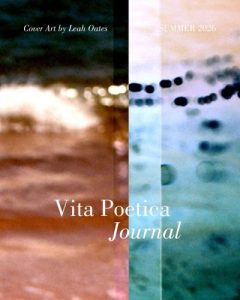
Opening the online Vita Poetica Journal Summer 2026 are these lines from Co-Editor Caroline Langston: “For six years, every edition of Vita Poetica has bitten off and tasted the range of human perspective and experience, the deep terroir and diversity of truths. We’ve generally struck a tone that is both genial and hopeful. Not this time. The most striking top notes you’ll encounter in this issue are grim ones. There’s plenty of judgment, death, and graves.”
Contributing to this issue with poetry are Matthew E. Henry, Jeannine Marie Pitas, Sean Cho A., Stephen Haven, Aaron Brown, Hilary Sallick, Richard Chess, En Lin Koh, Christina Ellison, Frank Paino, Sharlee Mullins Glenn, Barry Casey, and Isabel Chenot; fiction by Louis Bourgeois; nonfiction by Alison Lock, Visual Arts, Leah Oates, Rajni Louise, and Sara Black.
Readers will also enjoy the interview “Divining the Past” with poet Chinua Ezenwa-Ohaeto in conversation with Christopher Honey, reviews, and “Contemplative Practices” offering two essays: “The Spiritual Practice of Birding” by Ragan Sutterfield and “Creating a Time Map” by Aizaiah G. Yong.
I’ve started noticing it while doomscrolling YouTube Shorts.
A jealous werewolf king imprisons his fated mate on one app. A werewolf rejects his destined mate for someone else on another. A vampire billionaire plots revenge on yet another. A dragon prince discovers a secret heir before I’ve even finished refilling my latest obsession: a tumbler packed with pebble ice and water.
Half the time the names don’t even change. How many Alaras and Lucians can one industry produce?
The funny thing is, I don’t object to monsters.
I love fantasy. Science fiction. Horror when I’m in the mood for it. Give me dragons, vampires, werewolves, ghosts, fae, sea serpents, eldritch horrors lurking beneath forgotten waters, and I’m willing to hear your pitch.
What I object to is treating monsters as shortcuts. Because monsters are fascinating.
The more I thought about it, the more I realized the monsters aren’t why these stories feel repetitive.
The shortcuts are.
Which got me thinking less about the monsters themselves and more about what monsters have always represented.
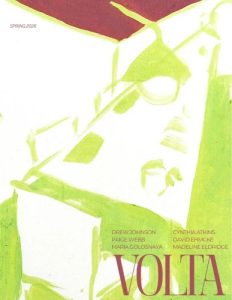
VOLTA‘s mission is to publish, “pieces that constantly confront readers with images that startle them into looking at the world in new ways” and “reinvigorate the written word for our generation and encourage writers of all ages to keep engaging with and challenging literary convention.” The Spring 2026 issue opens with an Editor’s Note arguing that language has grown stale through algorithms, clichés, and AI. Drawing on Gertrude Stein’s call to experience the world directly, the editors contend that authentic writing comes from lived, embodied experience. While AI can imitate human expression, it cannot truly perceive the world, making literature an essential way to preserve human creativity and individuality.
Working toward preservation are the contributors in this issue with poetry by Cynthia Atkins, Smile Ximai Jiang, Phill Provance, Evan Kerr, Paige Webb, and David Ehmcke; fiction by Drew Johnson, Adeeb Chowdhury, and Florence Ashley; and nonfiction by Elena Bowman. All content is free to read online.
Sometimes poetry arrives at exactly the right moment.
Lately, it has felt difficult to escape the weight of the world. The news cycle moves quickly. Wildfire smoke drifts across regions hundreds or thousands of miles from where the fires burn. Social media encourages us to react to everything all at once. It can be hard to slow down long enough to notice what is directly in front of us.
That’s one reason I was drawn to two poems from Tiger Moth Review Issue 16: Judith Yarrow’s “Resolutions for Today” and Harilaos Stefanakis’s “They call it development.” Though the poems approach environmental themes from different directions, both ultimately ask readers to consider balance—between attention and distraction, growth and preservation, action and restraint.
“Resolutions for Today” by Judith Yarrow
It is hard to slow down. To take notice of the little things. It can be equally hard to find the light peeking through when there is so much sorrow—or, lately, wildfire smoke—lingering in the air.
Judith Yarrow’s “Resolutions for Today” reminds us to slow down and appreciate what we overlook every day or to see it from a new perspective, letting in all the pinpricks of light from “sunset glory, / sliver of moon, / even dim gray.” The poem’s short lines reinforce this mindfulness, slowing the reader down and drawing attention to each image. Through scent, sound, and sight, Yarrow encourages us to pause and remain open to wonder in the present moment.
This is a reminder we all need right now. Not to simply look on the sunny side, but to remain open to the little things that can make life better.
“They call it development” by Harilaos Stefanakis
Manifest destiny. Improvements. Development. It is hard to believe that where cities now stand there were forests, wetlands, and wild places. Even today, we continue to see “progress” take the form of new developments as fields give way to subdivisions and forests slowly retreat while cities continue to expand.
Harilaos Stefanakis captures this brilliantly in “They call it development,” examining the cost of that expansion. The poem’s speaker reflects on once believing that growth meant strength, only to realize too late that it was really a hunger—one recognized when “[…] the shade trees were gone / and the ground would not / hold the rain.” Yet the poem refuses easy answers. The speaker’s desire to stop further development leads to a final question: “Is that also a danger?” In doing so, Stefanakis explores not only what is lost in the name of progress, but also the difficult balance between preservation and change.
Everything in Moderation
What I appreciate most about reading these poems together is the conversation they create.
Yarrow’s poem asks us to pay closer attention. Stefanakis’s poem asks us to consider the consequences of our choices. Both suggest that extremes carry risks. Too much distraction and we lose sight of wonder. Too much unchecked growth and we lose what made a place worth inhabiting in the first place.
A reminder that in life… it really is all about balance, isn’t it?
And to quote my favorite bean aficionado, Liam: “Everything in moderation.”
Sometimes wisdom arrives in poems. Sometimes it arrives from the smallest voices in our lives. Every now and then, they end up saying the same thing.
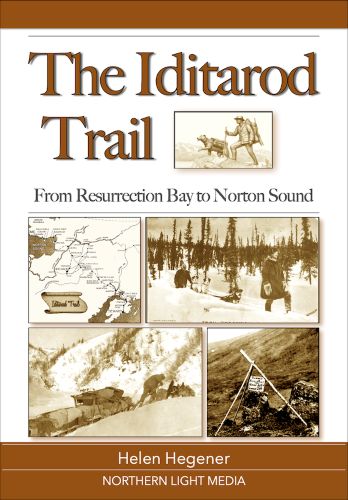
The Iditarod Trail: From Resurrection Bay to Norton Sound by Helen Hegener Northern Light Media, March 2026
The Iditarod Trail: From Resurrection Bay to Norton Sound by Helen Hegener chronicles the remarkable history of Alaska’s legendary Iditarod Trail, from its Indigenous origins and Gold Rush-era development to its role as a vital mail route between Seward and Nome. Hegener traces the trail’s decline, preservation, and revival as both the world-famous Iditarod Trail Sled Dog Race and a Congressionally designated National Historic Trail. The book explores the challenges of traversing this unique winter route across rugged mountains, frozen rivers, and subzero wilderness. Beyond the iconic 1,000-mile sled dog race, it also highlights other endurance events that follow the trail, including the Iron Dog snowmachine race, the Iditarod Trail Invitational ultramarathon, and the Crow Pass Crossing.
Helen Hegener is an author and a publisher (Northern Light Media), having published more than three dozen nonfiction books about the history of Alaska, the railroads, roadhouses, revenue cutter service, gold rush history, historic sled dog races, and many other topics. Her other most recent book is The First Newspapers of Knik and Anchorage (2024).
Hosted by The Ekphrastic Review and editor Lorette C. Luzajic, The Ekphrastic Academy offers a unique opportunity for writers to deepen both their creative practice and their engagement with visual art. Through online workshops, courses, and webinars, participants explore writer’s craft, art history, the lives of artists, and the rich tradition of ekphrastic writing—poetry and fiction inspired by paintings, photography, sculpture, and other visual media.
Designed for writers at all experience levels, the Academy emphasizes community, creativity, and meaningful discussion. Sessions are conducted online via Zoom and encourage participants to engage at whatever level feels comfortable, whether actively sharing work and ideas or simply listening and learning. The combination of literary craft instruction and close attention to visual art creates an inspiring environment for generating new work and discovering fresh creative approaches.
Want early access to our eLitPak flyers? Subscribe to our weekly newsletter! You can also support NewPages with a paid subscription and get early access to the majority submission opportunities, upcoming events, and more before they are posted to our site.
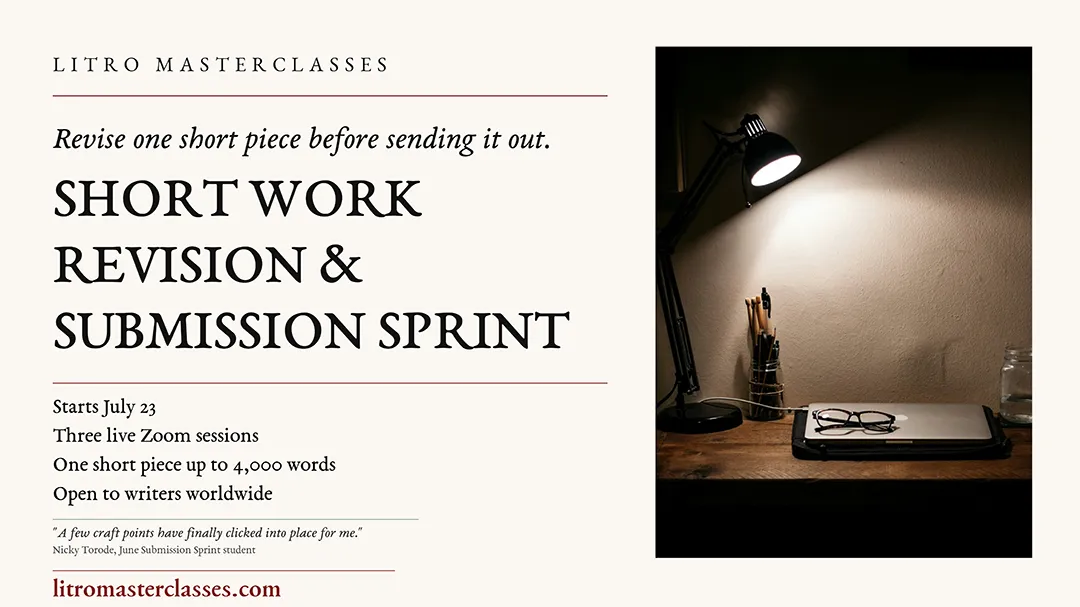
Unlike broader writing workshops, Litro’s Short Work Revision & Submission Sprint is designed around a single goal: helping writers prepare a piece for publication. Participants focus on one short story, essay, flash piece, or hybrid prose work of up to 4,000 words across three live Zoom sessions, receiving structured guidance as they move from revision to a stronger submission-ready draft.
The program is open to writers worldwide and is intended for those seeking dedicated editorial momentum before sending work out into the world.
Want early access to our eLitPak flyers? Subscribe to our weekly newsletter! You can also support NewPages with a paid subscription and get early access to the majority submission opportunities, upcoming events, and more before they are posted to our site.
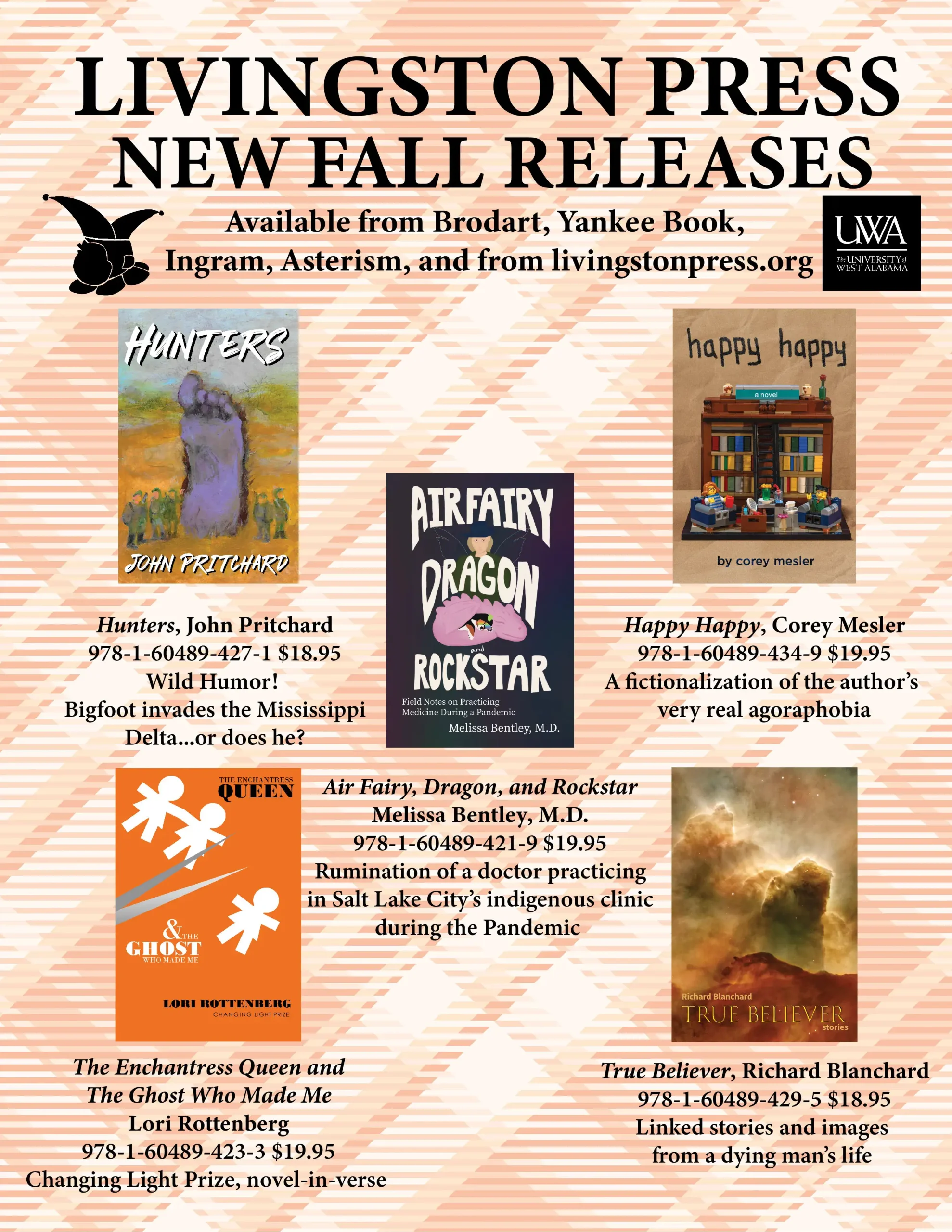
The Fall 2026 catalog showcases Livingston Press’s commitment to publishing distinctive voices across genres. Readers can look forward to Hunters by John Pritchard, a humorous tale in which Bigfoot may—or may not—be roaming the Mississippi Delta; Happy Happy by Corey Mesler, a novel inspired by the author’s experience with agoraphobia; and Air Fairy, Dragon, and Rockstar by Melissa Bentley, M.D., a reflection on practicing medicine in an indigenous clinic during the pandemic. The season also features Lori Rottenberg’s The Enchantress Queen and The Ghost Who Made Me, winner of the Changing Light Prize, and Richard Blanchard’s True Believer, a collection of linked stories and images examining a dying man’s life.
These forthcoming titles are available from Brodart, Yankee Book, Ingram, Asterism, and directly at livingstonpress.org.
Want early access to our eLitPak flyers? Subscribe to our weekly newsletter! You can also support NewPages with a paid subscription and get early access to the majority submission opportunities, upcoming events, and more before they are posted to our site.
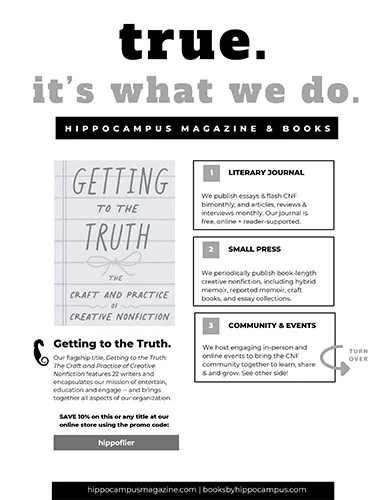
Hippocampus Magazine & Books is a creative nonfiction hub dedicated to “getting to the truth.” We publish a free, reader-supported online literary journal featuring essays, flash CNF, reviews, interviews, and craft articles, while also releasing book-length creative nonfiction, memoir, essay collections, and craft books. Hippocampus also fosters community through online and in-person events, including How-to Tuesdays craft talks, Stories on Sunday readings, and the annual HippoCamp Online conference for creative nonfiction writers.
Want early access to our eLitPak flyers? Subscribe to our weekly newsletter! You can also support NewPages with a paid subscription and get early access to the majority submission opportunities, upcoming events, and more before they are posted to our site.
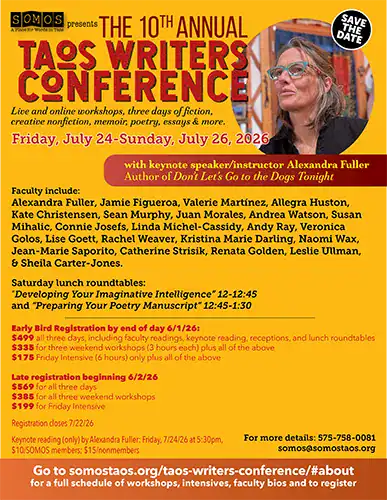
Join us at the 10th Annual Taos Writers Conference in beautiful Taos, New Mexico, July 24-26, 2026, with keynote speaker and featured faculty member, Alexandra Fuller (Let’s Not Go to the Dogs Tonight, Fi, and many others). Other instructors include Connie Josefs, Valerie Martinez, Juan Morales, Allegra Huston, Sean Murphy, & Kristina Marie Darling. Offering over twenty workshops in poetry, fiction, memoir, playwriting, screenwriting, and more. FMI: view flyer, [email protected], www.somostaos.org, or 575-758-0081.
Want early access to our eLitPak flyers? Subscribe to our weekly newsletter! You can also support NewPages with a paid subscription and get early access to the majority submission opportunities, upcoming events, and more before they are posted to our site.
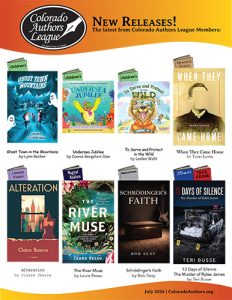
The Colorado Authors League (CAL) supports and promotes its community of published writers while connecting with and adding value to the reading world. Formed in 1931, authors become members to: keep up with changes in the craft of writing, publishing, and marketing, gain greater visibility for their writing, join a group of like-minded people who love writing.
This month’s collection of member releases showcases the breadth and diversity of Colorado Authors League talent. Readers will find mystery, historical fiction, middle grade adventure, fantasy, memoir, inspirational works, and literary fiction among the featured titles. From Laura Resau’s The River Muse and Scott Graham’s Great Sand Dunes Massacre to Terri Lewis’s When They Came Home and Lija Fisher’s The Extraordinary Adventures of the Ordinary Barney Flarff, these new books highlight the creativity and range of writers across the CAL community.
Want early access to our eLitPak flyers? Subscribe to our weekly newsletter! You can also support NewPages with a paid subscription and get early access to the majority submission opportunities, upcoming events, and more before they are posted to our site.
Happy Friday! And, sadly, I have to announce a brief interruption to our usual schedule: I’ll be on vacation next week, so our Friday submissions roundup will not be posting as normal.
The good news is that our Monday newsletter will still go out as scheduled, and paying subscribers will continue to have access to our full submissions calendar and any new updates added throughout the week.
I hope to return rested, recharged, and ready to keep sharing carefully vetted opportunities in the next weekly roundup. Until then, happy writing, happy submitting, and best of luck with any deadlines you tackle over the coming week!
Submission Opportunities: 129 Ways to Share Your Work
Looking for places to submit your writing, artwork, or hybrid work? You’re in the right place.
Each week, NewPages curates and updates a comprehensive list of open submission opportunities, including literary magazines, journals, presses, contests, and calls for themed issues. Opportunities span poetry, fiction, nonfiction, cross-genre, visual art, and more, with options for both emerging and established writers.
Full disclosure: I don’t like Twilight. Never have. I got through the first two books, but the third was harder and the fourth almost impossible. I tolerated the movies more than the source material, and never once liked Bella and Edward as characters—two people whose self-hatred, insecurity, and boundary-crossing got dressed up as forever-love for four books running. Needless to say, that confession remains unpopular with the fan base, but one of the joys of literature is the subjectivity, isn’t it? I even follow someone on YouTube who’s built her whole channel on being openly critical of Twilight’s problems while still loving the series anyway, a position I respect and have never personally been able to reach. I just never loved it. I don’t think I ever will.
But not liking something doesn’t stop you from thinking about it, if anything, it sharpens the question. Strip away the vampire baseball and the werewolf drama and what’s actually happening between Bella and Edward is stranger than “great love story,” and it’s not even one-sided, which is what makes it more interesting than the average toxic-romance template. Bella wants to be seen, permanently, immortally, by someone who will never stop looking at her. Edward wants the one mind on earth he can’t read, the only silence in a world of constant noise. Neither of those is really love. They’re both solving a personal problem and calling the solution “devotion.”
They aren’t unique. Heathcliff digs up Cathy’s grave. The Phantom builds an entire opera house’s worth of architecture around a woman who never asked to be watched. Fiction is full of people who love so hard the other person becomes optional—a fixed point to orbit rather than someone to actually reach.
Some stories want you to feel that discomfort on purpose, the unease is the craft, not an accident. The best of them save the real reveal for the end. Tangled (2001) does this on purpose: Jonathan Rhys Meyers plays Alan, the edgy newcomer the audience is trained to distrust on sight, opposite Shawn Hatosy as David, the familiar, established best friend everyone assumes is the safe choice. The twist is the misdirection itself, the one who looked dangerous isn’t, and the one who looked safe was obsessive the entire time.
So here’s the question underneath all of it: when does watching someone become louder than loving them?
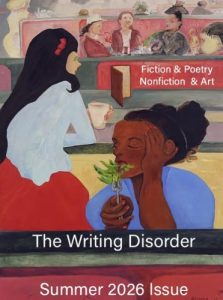
With The Writing Disorder‘s mission to showcase original and experimental works by new and emerging writers — particularly those in writing programs — as well as established writers, the Summer 2026 issue delivers! Offering full online access to content, this issue features fiction by MG Allan, Miles Efron, Mary Ann McGuigan, Jennifer Robbins Mullen, Meg D. Newman, Margaret Parker, Salem Withington, and Makenna Grace; poetry by Paula Appling, Paul Bavister, Sally Butler, Edward Johnson, Mark Katrinak, and A.J. Moss; nonfiction by Leslie Armstrong, Alexandria Gomes, Julie Piehler, and Mark Richert and Pris Rogers. Sumaiya Aftab Ahmed reviews A Guardian and a Thief by Megha Majumdar, and Jeff Bliumis is the featured artist for this issue.
There has always been something fascinating about the apocalypse. Do we want to live through one? Absolutely not. Yet there seems to be something deeply human about imagining the end, perhaps because we know all things eventually come to one, whether with a whimper or a bang. That curiosity first drew me to this week’s recommended reading, but it was the characters, their grief, and their remarkable relatability, even at the end of the world, that convinced me to stay.
Apocalyptic literature is nothing new. Fiction has seen the world destroyed by war, famine, earthquakes, massive weather shifts, aliens, disease…you name it. Cate W. Tam’s “Overgrowth” adds a breath of fresh air, or rather, a floral breath, to the end of the world, imagining nuclear bombs that give rise to mutated plants capable of taking root inside any living thing that breathes.
We follow Gabby and her younger brother Charlie as they leave their home behind on a journey with no real destination beyond survival. As they travel through an increasingly empty and dangerous landscape, they encounter strangers clinging to hope in different ways, from the automated “Pay ‘n Pray” booths still accepting coins to Valor, a pill that suppresses fear long enough to make impossible choices seem possible. Yet beneath every mile of their journey lingers Gabby’s greatest regret: never finding the courage to tell her best friend, Jun, how she truly felt.
While the circumstances are extraordinary, Gabby’s journey, her reactions, and the people she meets all feel remarkably familiar and deeply human. Tam explores grief, guilt, fear, and faith without ever losing sight of the people at the center of the story. Even small moments, like the eerie persistence of the “Pay ‘n Pray” booths or Gabby’s anger toward a woman whose religious assurances offer only frustration instead of comfort, reveal how differently people search for meaning when the world is falling apart.
By the story’s end, Gabby cannot bring herself to leave behind either the overgrowth that claimed her little brother or the memory of the girl she never kissed. “Overgrowth” is ultimately less about the end of the world than about the weight of love and loss, and the quiet, stubborn hope that keeps us moving forward even when there is nowhere left to go.
Recommended Reading, curated by Managing Editor Nicole Foor, is one of the many features included in the NewPages weekly newsletter. Subscribe to receive literary magazine highlights, new book releases, bookstore updates, writing prompts, and submission opportunities delivered straight to your inbox.
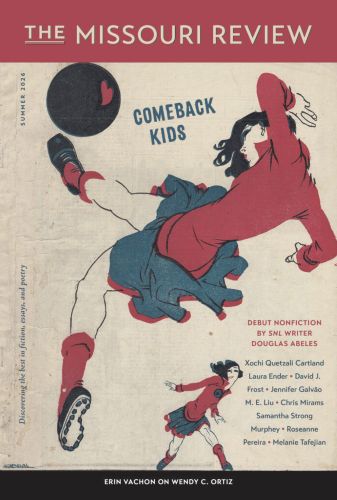
The Missouri Review 49.2 (Summer 2026) is themed “Comeback Kids.” Included in this issue is new fiction from Roseanne Pereira, M. E. Liu, Laura Ender, and Jennifer Galvão; debut nonfiction from SNL writer Douglas Abeles as well as new essays from Chris Mirams and David J. Frost; new poetry from Xochi Quetzali Cartland, Melanie Tafejian, and Samantha Strong Murphey. Also included is the feature “Curio Cabinet” on the career of Paul Robeson, an art feature on Marie Laurencin and the modern salons of France, an interview with short story writer David Ryan, and a review of three books by Wendy C. Ortiz.
Happy Friday! Do you remember when summer felt endless, stretching on so long like its interminable nights? It’s hard to believe those days ever existed. Now it feels like you blink and half the year has already slipped away.
While time has a habit of racing ahead, NewPages is here with a little spark of inspiration and this week’s roundup of submission opportunities to help you make the most of it. Don’t let these chances pass you by!
Sometimes our mouths move faster than our minds. Sometimes exhaustion, fear, or anger closes the distance between thought and action until there's barely any distance left at all.
Submission Opportunities: 130 Ways to Share Your Work
Looking for places to submit your writing, artwork, or hybrid work? You’re in the right place.
Each week, NewPages curates and updates a comprehensive list of open submission opportunities, including literary magazines, journals, presses, contests, and calls for themed issues. Opportunities span poetry, fiction, nonfiction, cross-genre, visual art, and more, with options for both emerging and established writers.
Sometimes our bodies move independently before our brain can register consciously what we’re doing.
Sometimes exhaustion, fear, or anger closes the distance between thought and action until there’s barely any distance left at all. We say something we don’t mean forever, only for a heartbeat. We do something we would undo instantly if time allowed it.
Most of those moments disappear.
Some don’t.
During the years I cared for my grandmother, we had nights when exhaustion got the better of both of us. One night she misheard something I’d said and became convinced I’d called her a name I never would have used. The argument escalated. Frustrated, I threw the television remote in her direction. I wasn’t trying to hit her, but it struck her in the chest anyway.
More than anything else, I remember the look on her face.
I can’t undo that moment. Intention doesn’t rewrite consequence. Love doesn’t erase hurt. Regret doesn’t travel backward through time.
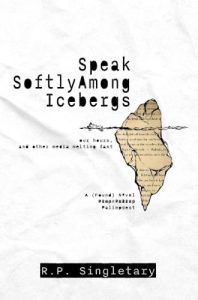
Speak Softly Among Icebergs by R. P. Singletary Parlyaree Press, April 2026
What is love but not grief, or grief–love? Oh, to linger in the time-stand-still!
A book of words FOR LOVERS meant to be read aloud, according to its publisher.
THE AUTHOR agrees. Its multiple voices and aching perspectives in the same page or paragraph fight against being boxed-in or Other-ed. Even and especially by traditional narrative story arc (do our minds work that way), A.I. algorithm (ditto), (insert other cute, buzz phrase), publishing house agenda, formatting.
IT’S 2026, post-9/11, a latest global pandemic, and the rest better left unsaid today. Oughtn’t we slow down, read something new? Told in a different light.
And listen to what our future selves might tell us when they, too, lie awake at night. As the novel’s introductory note makes clear, “The year is 2121.” Who’ll be here then? And doing what….
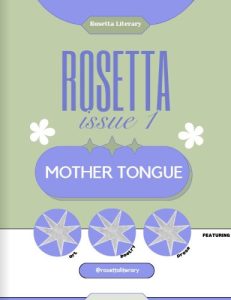
Rosetta Literary is a new online international literary magazine promoting diverse global voices that favors exploring the intersection of culture and language to challenge stigma and bias. This authentic, original, and creative publication connects writers and artists worldwide through inclusive storytelling and especially welcomes submissions from first-generation and low-income creators with a special focus on youth 14-25.
The name of the publication, the editors share, is “inspired by the Rosetta Stone and its global symbolism of diversity, multilingualism, and ‘deciphering’ the inner human spirit. Just like the Stone, we seek to be a beacon of culture through artistic expression.”
There is always something a little magical about stories that invite us to make assumptions only to quietly turn those assumptions on their heads. What seems obvious at the outset proves to be something entirely different by the end, making the emotional payoff all the more poignant. That kind of narrative confidence requires a careful balance of misdirection and honesty, and Wendy Elizabeth Wallace achieves it beautifully in “Help Is on the Way.”
Wendy Elizabeth Wallace’s “Help Is on the Way” begins with a familiar winter disaster: a driver has crashed into the utility pole outside the narrator’s house. As she rushes out to help, she continually measures herself against Ryan, the former partner who always seemed to know exactly what to do when accidents happened on the dangerous curve outside their home.
At first, Wallace encourages readers to assume Ryan is gone because of tragedy. Instead, Wallace gradually reveals a far messier and more human truth. Through a series of increasingly awkward interactions with the injured driver, we learn that the narrator’s loneliness is self-inflicted: Ryan left after she cheated on him, and she is struggling with the consequences of that loss. Her attempts to recreate Ryan’s warmth and competence only expose the gulf between who she wants to be and who she is.
The story’s painful climax arrives when the narrator realizes she never called 911—a basic step Ryan always handled. Even after the accident victim leaves in frustration and emergency responders finally arrive, the narrator clings to Ryan’s reassuring text message despite recognizing its hollowness. Wallace crafts an uncomfortable, compassionate portrait of self-deception, regret, and the desperate hope that next time we might become the person we wish we already were.
Recommended Reading, curated by Managing Editor Nicole Foor, is one of the many features included in our weekly newsletter. Subscribe to receive new issues of literary magazines, book releases, bookstore updates, writing prompts, and submission opportunities, all delivered straight to your inbox.
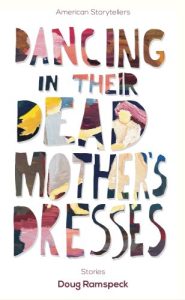
Dancing in Their Dead Mother’s Dresses by Doug Ramspeck Wolfson Press, August 2026 (Pre-order available)
In Dancing in Their Dead Mother’s Dresses, Doug Ramspeck’s luminous stories feel set as much in the characters’ minds as they are set in the Midwest. The muddy Midwestern rivers, train bridges, and winter lakes are sources of metaphors that help the characters make sense of unsettling realities: dead mothers, absent fathers, sick siblings, inscrutable friends, and intriguing neighbors. Dancing in Their Dead Mother’s Dresses calls to mind other language-rich story collections about the harsh realities of the urban and rural Midwest: The Luck of the Fall by fellow poet Jim Daniels and American Salvage by Bonnie Jo Campbell. Ramspeck shares an interest in traumatic events that destabilize our world. In our circumscribed realities, where mothers die but children live on, or brothers die and siblings must live on, sometimes all we have are the worlds of our imaginations.
“Rarely does a book hold me so firmly in its thrall, but Dancing in Their Dead Mother’s Dresses did from its first page to its last. The writing is masterful, and the characters are indelible. I loved these stories.” — Christine Sneed, author of The Virginity of Famous Men
Doug Ramspeck taught at The Ohio State University and now lives in Black Mountain, NC.
A trip to The Lake sounds like a great way to spend a hot summer’s afternoon, so lucky for readers, the July 2026 of this journal of poetry and poetics is now online featuring new work by Gemma Blakeley, Marilyn Cavvichia, Joe Garvey, Eric D. Goodman, Marcia Roberts Gregorio, Harriet Pinklock, J. R. Solonche, Shogo Olalekan Uthman, Ping Yee, and Lee Yongha.
The Lake offers readers reviews of newly published books of poetry. For readers this July 2026, Hannah Stone reviews Life Immediately by Lily Blacksell, Usha Kishore reviews Map of the Self by Mona Dash, Dustin Pickering reviews The Tao According to Calvin Coolidge by Charles Rammelkamp, and Loralee Clark reviews Love Song by Ann Chinnis.
Unique to The Lake are “One Poem Reviews” which share a sample poem from a recently published collections, with this issue spotlighting poems by both Martin Agee and Maggie Mackay. Poets with published books who would like to share a poem with The Lake readers only need to email Editor John Murphy to start the process.
Editor John Murphy has had his own work published in Notes, which can be purchased on The Lake‘s SHOP page. The poems in this book focus on artists and producers in the music industry, covering all major genres: rock, jazz and blues. Some of the artists: Joni Mitchell, John Mayall, Cleo Laine, Chuck Berry, Brian Wilson , Buddy Holly, Jimi Hendrix, and more.
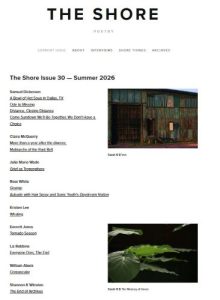
The Shore Issue 30!! has popped just in time for some summer reading! It features hot new poems by Samuel Dickerson, Claire McQuerry, Julie Marie Wade, Ross White, Kristen Lee, Everett Jones, Liz Robbins, William Alexis, Shannon K Winston, Verona Charman, Heather Hamilton, M J Young, Abraham Porschet, John Estes, Leqi (Angela) Xiao, Maggie Rue Hess, Maggie Wang, Emilee Wigglesworth, Alexa Doran, David Moolten, Paul Potts, Dan Albergotti, Matthew Toth, Michelle Turner, Peyton Cole, Daniel DeVaughn, Jennifer Bullis, Christine Light, Jingxuan William Zhuang, Chris Monier, Daniel Amster, Carly Osborne, Grant Clauser, Christy Prahl, Barbara Daniels, Cici Zhang, Peter Leight, Tom Laichas, Svetlana Litvinchuk, Olivia Burgess, Cole Pragides, and Natasha Kochicheril Moni. It also features vivid art by Sarah N B!
Fate seems determined to rain on our parade this year, with Mother Nature volunteering to handle the pyrotechnics across Michigan. Hopefully the oppressive heat and humidity that settled over much of the country this week has started to loosen its grip. If you’re celebrating the Fourth, here’s hoping the rain and storms wait until the festivities are over.
Don’t have plans, or need a backup if the forecast gets its way? NewPages is back with our first Weekly Roundup of submission opportunities for July, plus a creative prompt to help you make a little noise of your own this holiday weekend.
Submission Opportunities: 107 Ways to Share Your Work
Looking for places to submit your writing, artwork, or hybrid work? You’re in the right place.
Each week, NewPages curates and updates a comprehensive list of open submission opportunities, including literary magazines, journals, presses, contests, and calls for themed issues. Opportunities span poetry, fiction, nonfiction, cross-genre, visual art, and more, with options for both emerging and established writers.
It happens to us all. Nodding off at the keyboard mid-sentence. Eyes drooping during a show, reopening on a completely different episode (or worse, the credits). You weren’t sleeping. You were resting your eyes. Sure. Whatever helps.
And it only gets more complicated with age, doesn’t it? That surplus of energy we once took completely for granted has quietly negotiated itself down. Then factor in circumstances: tossing and turning, unable to find a comfortable position, a body and mind locked in high alert waiting for a call, running through a list, going past the point of no return out of sheer stubbornness and a flat refusal to admit there are limits.
There’s a word for the space where sleep and waking can’t agree on who’s in charge. Liminal, from the Latin limen, meaning threshold. Not in. Not out. Suspended at the door.
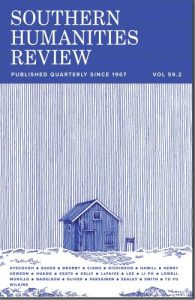
Southern Humanities Review 59.2 is a bird-filled summer issue featuring reprinted poetry from an exhibit titled Radical Naturalism: Lyric Birdscapes, including poems from Mary Oliver and Maggie Smith, selected by Nicole Sealey as Poet-in-Residence at The Jule Collins Smith Museum of Fine Art at Auburn University. The issue also features poetry from David Baker, James Ciano, Emily Dickinson, John Keats, Donika Kelly, Li-Young Lee, Li Po translated by Sam Hamill, John Murillo, Nicole Sealey, Tu Fu translated by Florence Ayscough and Amy Lowell, and Joe Wilkins; nonfiction from Matthew E. Henry and Courtney Ann LaFaive; and fiction by Taylor Brorby, Elissa C. Huang, Scott Nadelson, and Keija Parssinene. The cover art is “Solitude” by Katie Hewson.
Bear Review online journal issue 12.2 welcome a wide variety of poetry, reading submissions year-round to publish in two issues: spring and fall. “We do admire experimentation and blurred genres,” note the editors, who also hope to give readers “a view of the many and varied poetries written presently in English.”
This issue features the 2025 Michelle Boisseau Poetry Prize Winner Isaac Salazar, Runner Up Alexa Doran, and works by each finalist: KT Herr, Ellen Kombiyil, Arlene DeMaris, and Isaac Salazar.
Readers can also enjoy new poems by July Westhale, Jess Yuan, Nico Amador, Sarah Lynn Hurd, Flora Field, Jennifer Moore, Maria Picone, Nichole Turnbloom, Silvia Bonilla, Morgan L. Jenkins, John Fadely, Sarah Brockhaus, Keith Woodruff, Cecelia Hagen, Austin Segrest, Angie Macri, Joannie Stangeland, Emily Adams-Aucoin, Miriam Milena, Catherine Broadwall, Ashley Vogel, Ha Kiet Chau, and Clayton Adam Clark.
A.D. Nauman’s “Unbound” begins like a ghost story, or perhaps a childhood hallucination brought on by abandonment, when the narrator’s father leaves in 1972 and a piano begins to play by itself in the night. But what unfolds is something much larger: a coming-of-age story that interrogates identity, gender, desire, and the cost of forcing oneself into a shape that never quite fits.
Beryl’s relationship with Masha is especially revealing. The two are drawn together because they are both “strange”—outsiders in a world that rewards sameness. Beryl clings to Masha not just out of friendship but out of recognition, a sense of shared difference. Yet even here, identity proves unstable. Beryl tries to make sense of her feelings using the limited language available to her, wondering if she is “homo,” even as her desires resist easy categorization—split between her fascination with boys and the intimacy she shares with Masha.
There’s an irony in the fact that the Quaker school, ostensibly unconventional, becomes a place of relative acceptance, while the larger social world continues to enforce rigid norms. Over time, that tension sharpens: Masha eventually embraces her identity and, in doing so, becomes legible—almost “normal” within a framework that can now name her. Beryl, however, remains caught much longer in that in-between space, unable to fully inhabit any category offered to her.
As the story moves forward, Beryl tries on versions of herself—performing femininity, shaping herself into something recognizable—while the presence of Albert (a remnant of those earlier years when she and Masha claimed to be inhabited by spirits) persists as a deeper truth she cannot fully articulate. Only decades later does she claim it outright: “I’m a gay man in a female body.” What makes “Unbound” so compelling is not just this realization, but the long, uneven path toward it—where belonging is always provisional, and identity resists even the categories that seem, for others, to offer clarity.
Recommended Reading, curated by Managing Editor Nicole Foor, is just one part of our weekly newsletter. Subscribe to get new lit mags, books, bookstore updates, inspiration prompts, and submission opportunities delivered straight to your inbox.
Cleaver Magazine showcases innovative literary and visual art by both emerging and established creators, publishing poetry, fiction, essays, flash prose, dramatic monologues, and artwork open access online. The Spring 2026 issue opens with the Visual Poetics Contest Finalists as selected by Judge Kazim Ali and features works by Warren C. Longmire, Amy Beth Sisson, Alison Powell, Jack Brummett, Beth Kephart, Kristen Gallagher, Alan Pelaez Lopez, and G. Dylan Sessoms. The issue also includes fiction by EJ Green, David Driscoll, June Martin, Tracy Morin; flash prose by Jamie Holland, Lauren Woods, Ellen Winn, Karen Laws, Jacqueline Doyle, Christopher Passante, Debbie Weaver, Brooke Middlebrook, Laurie Blauner; and creative nonfiction by Amy Beth Sisson. Clifford Thompson’s visual narrative, “CONNECTICUS DIGGS — Cultural Detective Episode 5: The Path” closes out the issue.
Celebrating seven years of publication, Chestnut Review publishes poetry, short fiction, flash fiction, art, and photography from creators around the globe. A selective, writer-focused publication, Chestnut Review releases quarterly online issues and an annual print edition. The journal compensates contributors and staff and responds to all submissions within 30 days.
Their newest online issue, Spring 2026, features two interviews: Kate Caraballo interviews Kate Garcia, author of Bartending for a Stamp with my Face on It, and Maria S. Picone interviews Jad Josey, author of Cast Your Longest Shadow. Readers will also enjoy exploring new poetry by Daniel Aôndona, Donna Vorreyer, Hayley Clin, Jad Josey, Kate Garcia, Leonardo Chung, Spencer Jewell, Talan Tee, Wale Ayinla, Zixuan Angel Xin, Zoleikha Baloch; prose by Audrey Coldwell, Chip Houser, Haliru Ali Musa, Sarah Juma, Tina Kapousis; artwork by Adishi Gupta, Barbara Bitondo, Odunayo Abiodun, Ojo Olaniyi, and Shee Gomes. Chestnut Review 7:4 Launch Party – Spring 2026 with select authors reading their works is available on YouTube.
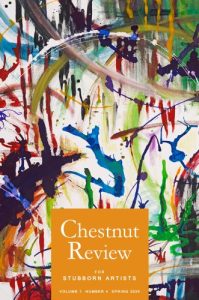
Chestnut Review Spring 2026 cover art is Eight by Emily Rankin: “Using layers of color and tangled shapes, Eight explores the intertwined nature of dreaming and wakefulness, memory and reality, and the confusing network of connections we have with one another.”
Happy Friday! Can you believe this is our final submissions roundup for June? How is 2026 already halfway over? Someone once said time flies when you’re having fun—but they clearly weren’t an adult, where time seems to fly no matter what.
That’s life, isn’t it?
In any case, enjoy this last roundup of the month—and don’t miss those end-of-June deadlines! Need a spark before you submit? Check out the latest inspiration prompt below.
Submission Opportunities: 116 Ways to Share Your Work
Looking for places to submit your writing, artwork, or hybrid work? You’re in the right place.
Each week, NewPages curates and updates a comprehensive list of open submission opportunities, including literary magazines, journals, presses, contests, and calls for themed issues. Opportunities span poetry, fiction, nonfiction, cross-genre, visual art, and more, with options for both emerging and established writers.
From 2019 to 2022, I was a Pampered Chef consultant on top of my day job as NewPages Managing Editor. The gig itself was nice on paper: work from home, run your parties on Facebook, no garage full of inventory, no hauling gadgets into someone’s kitchen. Low pressure, low risk, or so it seemed.
Here’s what the recruitment pitch doesn’t tell you: the whole thing runs on connection, and “200+ friends” on Facebook is not the same thing as 200 real, tangible relationships. Some of those names were core friends. A lot of them were distant family, old coworkers, people I’d liked a few photos for over the years but hadn’t actually talked to in forever…if I knew them personally at all. Selling requires reaching past that surface layer into something real enough to ask someone for their time, their money, their living room—and that gap between the friend list and the actual friendship was where most of the exhaustion lived.
Then the pandemic hit, and the math got worse. Asking people to host a virtual party during a year of layoffs and economic free-fall didn’t just feel awkward, it got you shamed for it. Guilted for daring to ask, even gently, even apologetically. I was supposed to keep hitting a quota built on relationships that were mostly performance, during a year when even real relationships were straining under the weight of everything else.
Unwrap Your Candy: A Bloomsday Novel by Jesse Miller LJMcD Communications, June 16, 2026
Eluding narrative structure conventions, Jesse Miller’s cinematic Unwrap Your Candy: A Bloomsday Novel is a novel about being madly in love with — and consequently, blissfully intoxicated by — language. If you had planted James Joyce’s wayward, disjointed, but actually very loving son in contemporary America, he might have written this book.
Unwrap Your Candy: A Bloomsday Novel is the story of Thom Evans and a day/night he spends after he leaves his miserable job at a condom factory for a night on the town with his compellingly attractive, but seriously wounded lover, Samantha. Over the course of the evening, in much the same way that Leopold Bloom and his surrogate son, Stephen Dedalus, bumbled through Joyce’s Dublin, Thom and his memories of his father drunkenly bumble through a modern American city in all its glitter and crassness.
“An energetic but also tragicomic depiction of industrial-corporate life in ways that alternate between the mundane and grotesque. Irreverent, occasionally surreal, and with structural quirks, the prose is vivacious. Shades of The Pale King run throughout the novel.” — Daniel Davis Wood, author of At the Edge of the Solid World
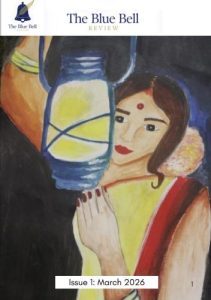
Within its first year, The Blue Bell Review has earned widespread trust within the literary community, leading to numerous collaborations with organizations and youth-led initiatives. Recent partnerships include a Young Writers’ Ekphrastic Contest with Phosphorescent Lit, creative arts and writing workshops for rural students in Hosapete with the Sakhi Trust, and ongoing projects with the Sama Foundation and Beyond the Lines. The platform attracts contributors at all levels, from emerging writers seeking certificates to established authors participating in in-depth interviews. Its international reach is reflected in submissions from India, the United States, Canada, Indonesia, Luxembourg, and South Korea.
The Blue Bell Review publishes quarterly issues with occasional special issues as well as regularly updated content on their website, accepting a wide range of submissions in writing (poetry, prose, essays, reviews, op-eds, travelogues, and articles), art (drawings, paintings, collages, 3D art, digital art, Best-Out-Of-Waste, etc.), and multimedia (animations, audio, video, apps, and music). Each issue is published as an HTML Flipbook, PDF, free download, and open online access.
If you haven’t subscribed yet to our weekly newsletter (seriously—what are you waiting for?), you can dive into this week’s recommended reading here. Selections come mainly from literary magazines and websites and are curated based on Managing Editor Nicole Foor’s tastes.
“Burning Juniper” by Bruce McRae
There’s something in the language and word choices of Bruce McRae’s “Burning Juniper” that feels like an old-time spell—talk of witches, warding off evil, summoning something protective—yet it unfolds alongside a relationship rendered with striking intimacy. The poem seems to hover at a point of farewell, arriving at that surprising, almost offhand “when o’clock in the fare-thee-well,” even as it insists on a love that feels boundless: someone the speaker would “wed every day for a year. / Infinite love. Eternal honeymoon.” That juxtaposition—of enchantment and ending, of something slipping away and something that feels like it should last forever—gives the poem its quiet charge.
Read the poem in the Spring 2026 issue ofBloodroot.
“The Horror of Forward Motion” by John Grey
As we get older, when more and more time comes to stand between youth and the present, you can’t help but feel how brutal forward motion can be. John Grey captures that unease perfectly in “The Horror of Forward Motion.” Unlike wine, not everything improves with age; relationships fray, and our own bodies begin to betray us. Grey gives that erosion shape in lines like, “From afar, your friends / speak well of who you were. / What use is that? / What was laughter / thirty years ago is silence now.”
The poem insists on movement as something inescapable and indifferent—time as a force you can’t negotiate with, only endure. Even memory becomes a burden, something “large, a dead weight,” always ahead of you, something you stumble over rather than return to. It’s a stark, unsettling meditation on aging, where the past is no longer accessible comfort but a kind of obstruction, and forward motion offers no relief, only continuation.
Sailing with Angels: A Poetic Tale of Grief and Grace by Laura Briel Sullivan, Illustrated by Aileen Bennett Susan Schadt Press, May 2026
Sailing with Angels: A Poetic Tale of Grief and Grace by first time author Laura Briel Sullivan is a luminous, comforting fable that beautifully navigates the heavy waters of loss. Shortlisted in the Faulkner Society Wisdom Competition, Sailing with Angels is a love letter to her parents’ generation.
The story follows Princess Briel, a young girl mourning the loss of the generation ahead of her. Armed with a mysterious talisman, she sets sail on the open water. Along her journey, she encounters a series of guiding figures — the Judge, the Alchemist, and the Harbormaster — who offer nautical pearls of wisdom. These “angels” help her realize that honoring the past means keeping the door to memory open, allowing love and laughter to sail through.
This moving debut feels like a treasured keepsake, born from the author’s childhood summers spent along the shores of Martha’s Vineyard. Sullivan invites the reader to bask in the warm, sun-faded nostalgia of long-ago coastal days, serving as a beautiful tribute to the real-life characters of her summer life. Structurally, Sullivan’s solid rhymes and vivid imagery mirror the gentle, rhythmic flow of a tide.
Ultimately, this poetic journey offers a gentle reminder that love remains bright against strong headwinds.
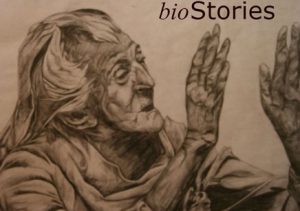
Publishing weekly online, bioStories showcases literary essays that illuminate both ordinary and notable lives, capturing moments of grace through vivid, compassionate storytelling. Recent featured stories include “In the Rumor of Forests” by Jeff Beyl, “The Blue House in the Hemlocks” by Katherine Casey, “Winter Protocol” by Joe Class III, “Veterans” by Pamela Cravez, “Locked” by Natassia Guyton, “A Love Letter to Linens” by Vicki Holder, “The Day the River Spoke” by Nisar Kakar, “Lost Footing” by Katje Lattik, “A Last Custard Cup” by Sydney Lea, “Better at Being Human” by Allysa Raymond, “Frozen in Midair and Soup-hound Tales” by Sharman Ober-Reynolds, “Magnificent Otis” by Brady Rhoades, “V-Cuts” by Matt Rosenberg.
bioStories accepts nonfiction prose submissions between 500 and 7,500 words, with most published essays averaging about 2,500 words. The journal also welcomes artwork that reflects its mission and complements featured essays, as well as cover art for its digital issues and print and digital anthologies. Visit the bioStories website for submission guidelines and additional information.
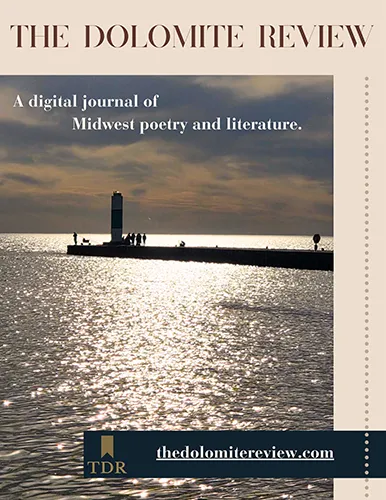
The Dolomite Review is a dynamic literary magazine highlighting narratives from the Midwest. We feature poetry, short fiction, and essays from new and established writers. We also now accept photography. Our focus is storytelling; therefore, we prefer prose or narrative poetry. We want character driven short stories and relatable essays. Send us your finest work, keeping our mission in mind. Deadline: Rolling, Year Round. Submit here.
Want early access to our eLitPak flyers? Subscribe to our weekly newsletter! You can also support NewPages with a paid subscription and get early access to the majority submission opportunities, upcoming events, and more before they are posted to our site.
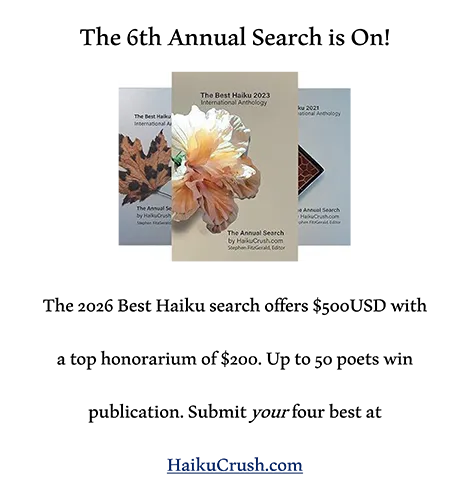
The 2026 Best Haiku international search offers $500USD with a top honorarium of $200 awarded by Haiku Crush’s three judges. Up to 50 poets will win book publication. Submit your four best at HaikuCrush.com. Deadline: October 18, 2026
Want early access to our eLitPak flyers? Subscribe to our weekly newsletter! You can also support NewPages with a paid subscription and get early access to the majority submission opportunities, upcoming events, and more before they are posted to our site.
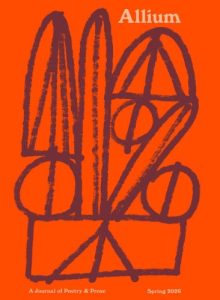
Published by Columbia College Chicago’s Department of English and Creative Writing, Allium: A Journal of Poetry & Prose features evocative, daring poetry, prose, interviews, and reviews in one annual print and one annual online issue, alongside a monthly podcast highlighting contemporary literary voices. The Spring 2026 issue features new poetry, fiction, and nonfiction by Sara Atwater, Hadara Bar-Nadav, Martine Bellen, Ana da Silva, Lucy Doherty, Sean Thomas Dougherty, Mark Fishbein, Zachary Salman Green, Rowan Hartfield, John Levy, Joseph Bardin, Giorgio Fontana, Rachana Pathak, Beth Richards, Derek Anderson, Adeeb Chowdhury, A.M. Gordon, Rebecca Johnesee, Kendall Repins, Andrew Ruhnke, Riley Skinner, Dylan Terry, and many more.
Happy Friday! Summer decided it didn’t want to be hot and went to cool and rainy for the week. We needed the rain after that dry, hot spell…but now the grass is growing like a weed and with more rain in the forecast it’s definitely not getting cut.
If rainy or cool weather has cancelled your outdoor plans, NewPages has plenty to keep you busy with our weekly roundup of submission opportunities and a little spark to ignite your creativity.
A single shift in diction (house to home, father to dad) can hold an entire emotional history; this week's prompt asks you to write into that distance and what closes…
Submission Opportunities: 100+ Ways to Share Your Work
Looking for places to submit your writing, artwork, or hybrid work? You’re in the right place.
Each week, NewPages curates and updates a comprehensive list of open submission opportunities, including literary magazines, journals, presses, contests, and calls for themed issues. Opportunities span poetry, fiction, nonfiction, cross-genre, visual art, and more, with options for both emerging and established writers.
Paid newsletter subscribers receive early access to many of these calls before they’re posted publicly, along with our monthly eLitPak Newsletter, featuring additional opportunities, events, and industry news.
✏️ Have young writers at home? Don’t miss our Young Writers Guide, which highlights contests and publications open to grades K–12.
🏆 Interested in writing contests, book awards, and literary prizes? Explore our curated list of current contests from literary magazines, independent and university presses, writing organizations, and events.
🔔 What’s new this week? Items marked with a bell icon are newly added to this roundup.
Language. Semantics. Word choice. If two words are essentially the same thing, then why do we struggle so much to figure out sometimes the perfect word to embody something? Having lived in the house that I have lived in for 39 out of my 41 years of life and being a first-time homeowner, I became fixated on the idea house versus home. Since I grew up here, it truly is my “home”—memory and ghosts live here.
Most everyone knows the difference between house and home in our bones, even if we’ve never stopped to examine the why. One is a structure while the other is something you carry with you.
The same quiet revolution happens in other word pairs. Mother is the formal term—clinical, correct, used in paperwork and introductions. Mom is something else entirely. It’s the word worn soft by use, the one you say when you’re scared or homesick or calling from three states away. And then there’s the pair that carries the sharpest edge: father and dad. Anyone can be a father. It takes something more—time, presence, choice—to become a dad.
What makes these pairs so powerful isn’t that the informal version is “better.” It’s that the shift between them contains a whole story. And this week, we want you to create that story.
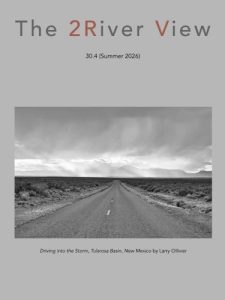
The Summer 2026 issue of The 2River View online journal of poetry features new work by Eileen Gloster, Dmitry Blizniuk, Pam Crow, Dolo Diaz, Erin Evans, Will Falk, Reina Garcia, Emily Light, Madeleine Pool, Forrest Rapier, and Ellen June Wright. 2River is an independent press offering free, innovative, print-ready poetry literary magazines as well as individually authored chapbooks. Authors also provide audio recordings, so readers can download and print the publication, listen to it online and via SoundCloud, and access the publication’s archive of issues and chapbooks. Submissions for the Fall 2026 issue of 2RV close August 30.
In the Summer 2026 issue of New England Review (47.2), readers can experience excerpts from New England Review’s international folio “Brazilian Badlands: Seven Women Writing the Brazilian Northeast,” guest edited by Bruna Dantas Lobato; rewarding prose by Laurence de Looze, Olaniyi Omiwale, L. F. Khouri, and Douglas Silver; and multifaceted poetry by Jennie Malboeuf, Cynthia Cruz, and Matty Layne Glasgow. Cover art by Gustavo Amaral.
The issue opens with a note from Poetry Editor Jennifer Chang reflecting on a graduate seminar about endings and offering a farewell to her role as poetry editor. Chang explores poetic closure, artistic experience, and the persistence of meaningful conversations. Through literature, music, teaching, and editorial work, Chang argues that the most powerful endings resist resolution, continuing to resonate, transform, and inspire. Indeed, the editors note that while Chang “will conclude her duties as poetry editor shortly after this issue is released from the printer, more of her selections will appear in the next issue. In the spirit of her editor’s note above, this ending is to be continued.”
Do you ever read a piece and think, that sounds a lot like my childhood? Granted, I would be outside sledding down hills in winter, building snowmen and snow forts—unlike the narrator—but I also spent a fair amount of time indoors, nose buried in a book.
Scherfling does an excellent job setting the scene: a boy with his feet resting on a radiator, lost in stories that carry him far away—the San Francisco Bay instead of the Lake Erie shoreline. The sense of transport feels immediate and familiar, but what lingers is how real those imagined places become. The boy may see his own life as mundane, but he reshapes what he knows into something larger—imagining himself in those distant settings, drinking pop while the adults drink cheap beer and whiskey, filling in the gaps with details from his own world. Even the differences matter: where his Ohio fog arrives all at once, in San Francisco it rolls in slow and theatrical.
And anyone who has spent time in a library knows another detail he captures perfectly: the scent. That musty paper smell. Old leather. Dust. It doesn’t take much description to bring it all back.
By the end, the piece opens outward in a quiet, surprising way. The boy isn’t just imagining other lives—he begins to wonder if someone, somewhere, might be imagining his. It’s a small turn, but a powerful one, reminding us how easily we become part of someone else’s imagined world, just as vividly as they become part of ours.
Read the story in iExile, a journal coming back after a long hiatus.
Recommended Reading, curated by Managing Editor Nicole Foor, is just one part of our weekly newsletter. Subscribe to get new lit mags, books, bookstore updates, inspiration prompts, and submission opportunities delivered straight to your inbox.
“The Ambiguity of the Hypotheses”: four landmarks within the tangles, networks, and knots of Gadda’s Pasticciaccio by Adria Bernardi Bordighera Press, April 2026
An extended hybrid essay, The Ambiguity of the Hypotheses is part personal essay, part travel essay, part family and cultural history, part literary analysis, and part philological obsession, which emerged from a reconsideration of Carlo Emilia Gadda’s Quer pasticciaccio brutto de via Merulana, a masterpiece of 20th century Italian literature. A great experimental novel and influencer of the crime genre, Gadda’s Pasticciaccio considers fascism and the language of fascism. The essay is part of the Robert Viscusi Essay Series.
“It’s a tangle. It is a big tangle of a novel. A series of knots within knots within knots.” — from The Ambiguity of the Hypotheses
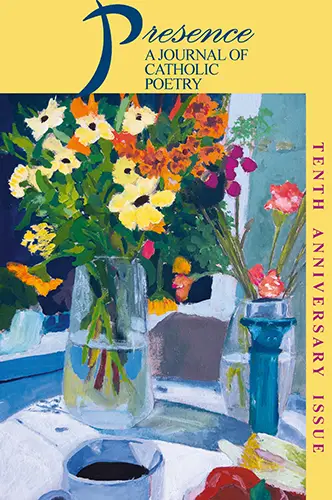
The 2026 annual issue of Presence marks its 10th Anniversary of publishing the best poetry informed by the Catholic faith as well as book reviews, interviews, and “life’s work” essays. This newest issue’s featured poet is Judith Valente, and the Featured Translations section focuses on works by Kutsugen, Mei Sheng, and Rihaku — translated by Ezra Pound, and works by Li Bai — translated by Vayda Pascarella.
Readers will find two interviews in Presence 2026: “’A Way of Saying Yes’: Samuel Hazo on the Communion of Poetry and Faith” by Janine Molinaro and “Evidence of the Divine: Landscape, Dream and Transformation in the Poetry of Linda Nemec Foster” by Anne-Marie Oomen. In addition, there are 26 book reviews, and “Life’s Work” features “Spending Time with Martha Silano” by J. D. Schraffenberger and “Joseph Bathanti: A Life Redeemed Through Poetry” by Ann Ritter.
Sadly, Presence lost three members of their growing community of poets in 2025, offering readers an “In Memoriam” section with works by numerous poets in honor of Martha Silano (1961—2025), Jane Greer (1953—2025), and Jennifer Martelli (1962—2025).
Works by over four dozen poets fill out Presence 2026, including Susanne Paola Antonetta, Bruce Beasley, Seán Carlson, Robert Cording, Alice de Chambrier, CX Dillhunt, Lynn Domina, Ann Fisher-Wirth, Carly T. Flynn, Jana-Lee Germaine , Mia Schilling Grogan, Katie Hartsock, Marci Rae Johnson, Desmond Francis Xavier, Nancy Krygowski, Margaret Mackinnon, Paul Mariani, Steve Myers, Brennan O’Donnell, Kyle Potvin, Dana Ranga, Skip Renker, Eva Skrande, Julie Cadwallader Staub, Carey Taylor, David Thoreen, Cara Valle, Anastasia Vassos, Gail White, James Matthew Wilson, and Carolyne Wright among others.
Celebrating 20 years, the August Poetry Postcard Festival invites writers to sign up to be placed in a group. As each group reaches 32 registrants, each participant receives a list of names and addresses of the others in their group. The goal is to write a poem a day on a postcard to the next person on the list after your own name and mail it to them. In return, you will receive a poem from each participant in your group. Writers are encouraged to start in advance of August 1 to allow time for the postcards to arrive, but it’s common to have some days go by with no card arriving and others with several cards waiting in the mailbox.
In 2025, 493 participants spanned 9 countries around the globe: Canada, France, The United States, Italy, Ireland, Great Britain, Australia, Japan and Austria and 46 U.S. states and Canadian provinces, including the District of Columbia.
If you cannot participate this year, there is always next year to look forward to! Registration for this event opens September 1 of each year; early bird registration closes June 4; final registration is July 4.
Posit online literary magazine publishes curated poetry, prose, and art, favoring innovative, finely crafted, often experimental work with depth and resonance. The editors invite readers to Issue 42, which features “visual art and literature that integrates innovation with interrelation, challenge with resonance, and discomfort with grace.”
Poetry and prose contributors to this issue include Mike Bagwell, James Butler-Gruett, Valerie Coulton, Elizabeth Dodd, Corwin Ericson, Pearl Kan, David Lehman and David Shapiro, Eléna Rivera, Orchid Tierney, G. C. Waldrep, John Walser, and Evan Williams, plus textiles, sculpture, painting and more by Nancy Cohen, Tamara Kostianovsky, and David Webster.
Cover art: Tamara Kostianovsky, Finding Space (2025)